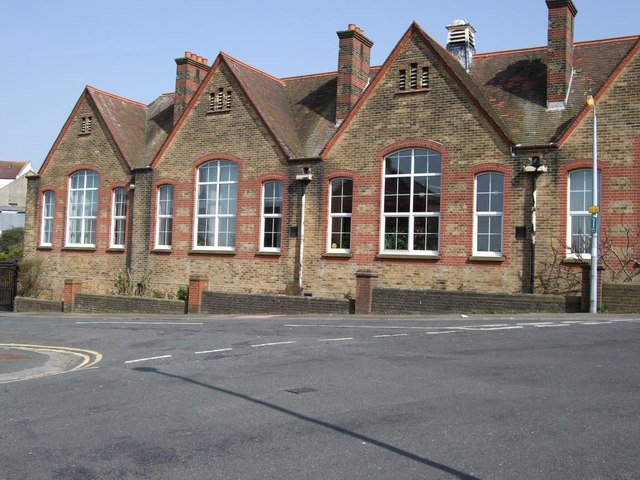
Brighton & Hove City Council can now proceed with the Wellington House day centre closure after a scrutiny committee rejected a last attempt to send the decision back for reconsideration.
Last updated: 30 September 2026, 7.15am.
At a glance
- The People Overview and Scrutiny Committee considered the closure on Tuesday 29 September.
- The vote on the call-in split 4–4; chair Councillor Sam Parrott used her casting vote to reject it.
- The council’s original cabinet decision can therefore be implemented, but no fixed closure date has been announced.
- All 21 current users must have alternative support arranged before Wellington House closes.
- Families should ask for the proposed placement, transport plan and six-week review arrangements in writing.
What happened to the Wellington House day centre closure?
The council’s cabinet approved the closure on 17 September, subject to the normal call-in period. Eleven opposition councillors then challenged the decision, arguing that there had been insufficient consultation and evidence, inadequate consideration of legal and financial advice, and concern that the outcome may not have been proportionate.
The official call-in report gave the committee three options: allow the decision to be implemented, refer it back to cabinet, or send it to full council if members considered it contrary to the policy or budget framework.
Brighton and Hove News, whose Local Democracy Reporting Service reporter attended the meeting, reported that four councillors voted to end the challenge and four voted against. Councillor Parrott, the Labour chair, used her casting vote in support of the cabinet decision. The call-in was therefore rejected.
The council had not published the formal minutes of the 29 September meeting when this article was updated. The meeting papers and the official webcast remain available from the committee agenda page.
What the decision means for the 21 people using Wellington House
Wellington House in Wellington Street provides weekday support for 21 adults with learning disabilities and autism. The council’s report says eight have complex behavioural support needs, while some users also have communication difficulties, sensory differences, mental health needs, epilepsy or sight loss. Four other people use the building as a drop-in option with support staff on some days.
The closure is not meant to happen on one fixed date. The cabinet decision says it should follow a “carefully managed transition” and that every current user must receive equivalent care meeting their assessed needs through an external provider. The council says needs, preferences and friendship groups should inform each move.
The practical safeguard is the review process. The cabinet report promises a review six weeks after each placement, taking account of the person, their family or carers, the provider and professionals involved. An annual review should follow.
Why the council is closing the centre
The council says Wellington House costs about £862,110 a year, compared with an estimated £525,547 for external provision including travel. That produces a forecast full-year saving of £336,563, lower than the original £400,000 target.
Officials also describe the Victorian building as unsuitable for a modern day service without significant investment. They say attendance and referrals have fallen and that the independent market can provide sufficient capacity. The report identifies six established providers supporting 134 of the city’s 155 adults receiving day opportunities, plus three newly contracted providers offering up to about 55 additional places a day.
However, the consultation evidence was not neutral. Of 95 responses from families, carers, staff, organisations and other stakeholders, the council’s own report says the majority opposed closure. Recurring concerns included disruption to trusted routines and friendships, the ability of alternative providers to meet complex needs, transport, staff skills and the effect on unpaid carers.
Why this matters locally
This is not simply a property or budget decision. For people with complex needs, a familiar building, consistent staff and predictable routines can be part of the support itself. A placement that looks suitable on paper may still fail if the environment, transport or staff expertise is wrong.
The council’s financial case is significant, but so is the risk around implementation. The report estimates a £336,563 annual saving while acknowledging that 21 staff could face redeployment or redundancy. It also says the building may eventually be released for a capital receipt, although no sale process or timetable has been announced.
Brighton Locals’ view
Our judgement: the democratic route to reconsider the closure has now been exhausted, but the hardest test is only beginning. A split 4–4 vote settled by a casting vote shows that scrutiny concerns were substantial, not marginal.
The council may be able to deliver equivalent support at lower cost, but that claim must be proved person by person. Success should be measured by stable placements, preserved relationships, reliable transport and the experience of service users and carers, not simply by whether the building closes or the budget saving appears on paper.
What families and carers should do
- Ask the allocated social worker or care manager for the proposed provider, weekly hours, activities and staffing arrangements in writing.
- Confirm how transport will work, who will pay for it and whether journey times will change.
- Request details of how friendships and established routines will be maintained where possible.
- Make sure the six-week placement review is scheduled and ask who will attend it.
- Record any unmet need, distress, reduced respite or placement problem promptly so it can be considered at the review rather than waiting for the annual assessment.
What to watch next
The next evidence should be the council’s formal minutes, the promised transition programme and the scrutiny update described at the meeting. Key questions are how many suitable placements are secured, whether any proposed move fails, how transport costs compare with the forecast and how many Wellington House staff are redeployed.
Evidence of stable placements and positive feedback would strengthen the council’s case. Failed placements, reduced support or higher-than-forecast costs would require the decision and its implementation to face renewed public scrutiny.
Bottom line
Wellington House is now set to close once suitable alternatives are in place. The vote has settled the council process, but only careful, transparent transitions will show whether the promised equivalent care is delivered in practice.
Sources
- Brighton & Hove City Council: cabinet decision
- Brighton & Hove City Council: call-in report
- Brighton & Hove City Council: cabinet report and financial analysis
- Brighton and Hove News: committee vote report

Leave a Reply