Last updated: 11 October 2026, 7.29pm BST.
Project Safari, announced by the Ministry of Defence and QinetiQ on 10 October 2026, is intended to give small and medium-sized businesses a simpler route into specialist UK defence test and evaluation facilities. The plan targets a real obstacle: proving technology safely before it can be deployed.
What Project Safari defence testing changes
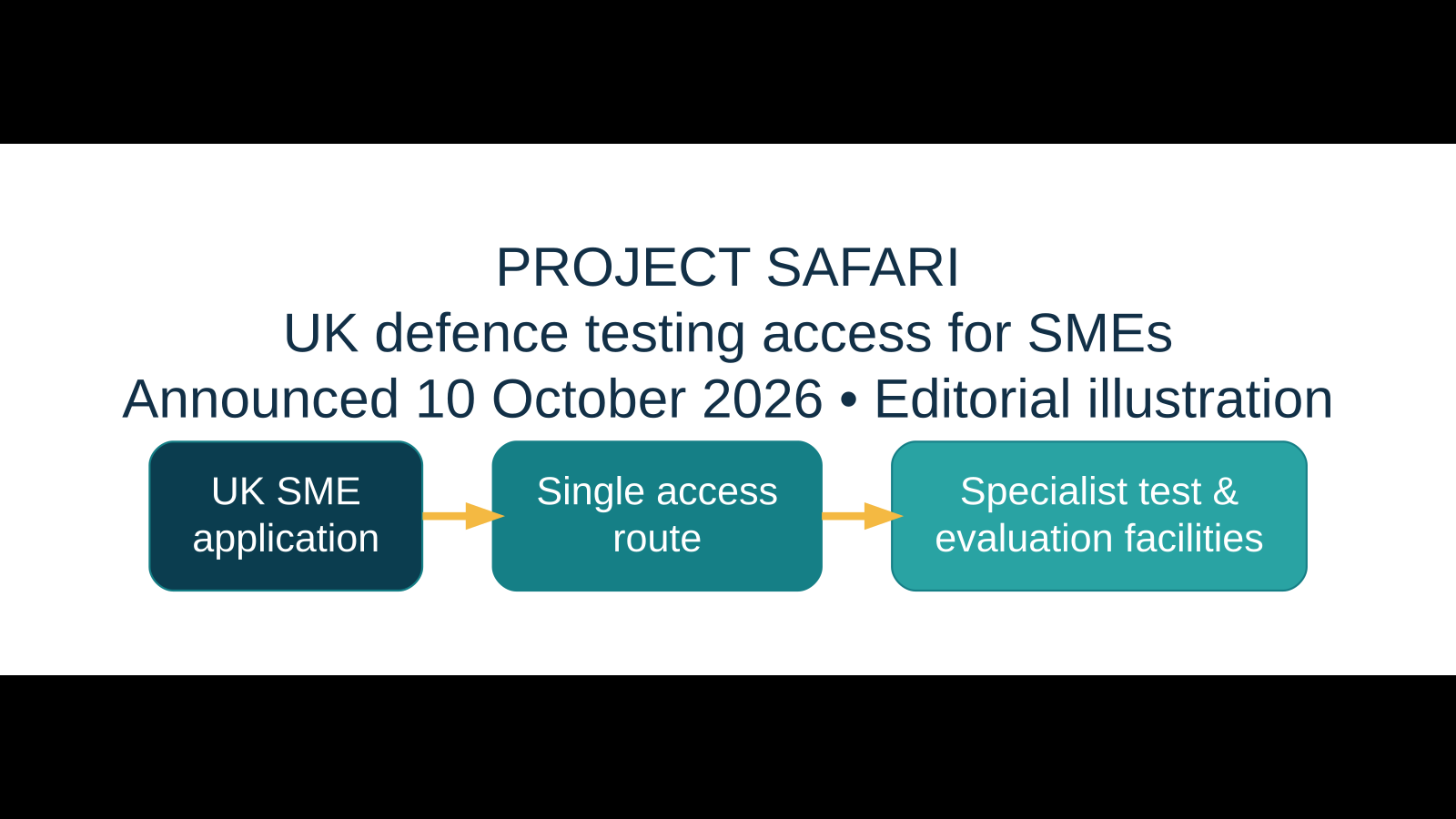
QinetiQ’s announcement says the programme will streamline approvals and access to specialist facilities. It also confirms that the first design stage of a multimillion-pound investment in the MOD Hebrides range has been agreed.
The government’s defence technology news index describes Project Safari as opening test and evaluation access for SMEs. Both sources are parties to the programme, so statements about speed and future impact remain programme claims rather than independent performance evidence.
What is already available
Existing MOD guidance on test and evaluation says some facilities are accessible through T3E, a service managed by QinetiQ on the department’s behalf. It lists 15 land, sea and air ranges.
Separate UK Defence Innovation guidance offers routes for funding competitions, procurement information and advice. That is useful now, but it should not be mistaken for a Project Safari application form.
Why it may matter to Sussex innovators
A Sussex engineering, robotics or software company could benefit if the promised access route reduces the time and administrative effort needed to test relevant technology. That is an inference from the national programme, not evidence that a specific local firm has been accepted.
What businesses should do
Define the capability, its maturity and the evidence a customer or regulator would need. Review the current UK Defence Innovation opportunities and existing T&E guidance. Before committing resources, ask which facility is relevant, what security and safety requirements apply, who pays for testing and whether any intellectual-property terms attach.
Brighton Locals’ view
Editorial judgement: A single access route sounds positive, especially for newcomers facing several approval layers. Its value will be measurable only when SMEs can see published entry criteria, timelines, costs and outcomes.
What happens next?
Watch for a named application route, eligibility rules and service standards. Those details would turn a promising announcement into a practical opportunity.
Bottom line
Project Safari may reduce a genuine barrier, but businesses still need the operating details before treating it as an open door.
Featured image: Editorial illustration by Brighton Locals of the proposed SME access pathway. It does not depict a specific test site or weapons system.

Leave a Reply