Last updated: 30 September 2026 at 10.25am BST
In short
- Traffic lights around Old Steine were switched on on Tuesday 29 September as Valley Gardens Phase 3 moved into its final stage.
- The former Aquarium roundabout has been replaced by a signal-controlled junction, alongside segregated cycle lanes and new walking routes.
- The Victoria Fountain is running again, but the newly laid lawns around it are expected to remain out of bounds for several weeks.
- Bollards, bins, electric-vehicle charging points and seafront lighting work still have to be completed.
- Drivers, bus passengers, pedestrians and cyclists should treat this as a bedding-in period and follow the new signals and signed routes carefully.
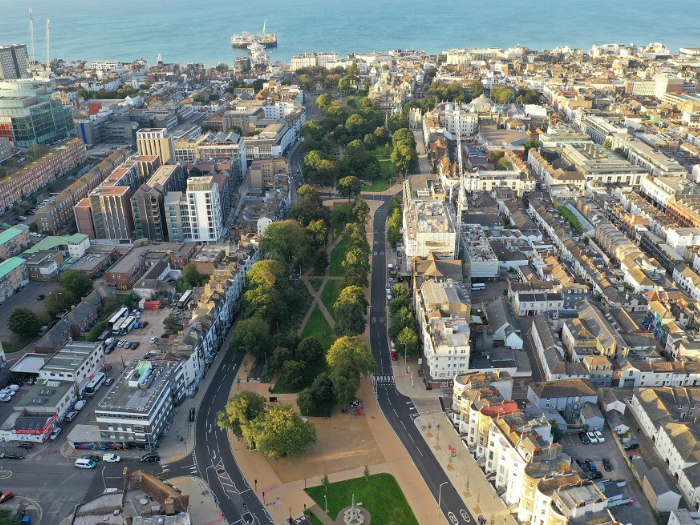
Brighton’s new Old Steine traffic lights are now operating as the long-running Valley Gardens Phase 3 overhaul approaches completion. The switch-on on Tuesday 29 September is a major milestone for the roads between the Royal Pavilion, Old Steine and Brighton Palace Pier, but it does not mean every part of the project is finished.
The change matters because this is one of Brighton’s busiest and most complicated junction areas. It carries the A23 into the city centre, meets the A259 seafront road and sits beside major bus stops, the Royal Pavilion, Sea Life Brighton and the pier.
What happened at Old Steine
Brighton and Hove News reported that the traffic signals around Old Steine were being activated on 29 September. It also reported that the Victoria Fountain had been switched back on following landscaping work.
The signals form part of Brighton & Hove City Council’s Valley Gardens Phase 3 scheme. The project replaces the old Aquarium roundabout with a signal-controlled junction, completes a two-way segregated cycle route to the seafront and creates more direct pedestrian links through the area.
The council says pedestrian space will rise from 45% to 64% of the project area, with about 8,800 square metres of new public space. Its official project material also identifies road safety as a central reason for the work: the wider Valley Gardens area recorded 154 collisions over five years, including 30 resulting in serious injury.
How the new Old Steine traffic lights affect journeys
The most visible change is at the former Palace Pier roundabout. General traffic can still travel north and south along the A23, but the final layout concentrates through traffic on the eastern side of Steine Gardens. At the seafront, the new junction is controlled by signals rather than a roundabout.
The council’s official Valley Gardens FAQ says its traffic control centre can monitor the junction and adjust signal timings during busy periods. That flexibility will now be tested under real traffic conditions, particularly at commuter peaks, busy weekends and during major seafront events.
For walking, the project provides more direct crossings between the seafront, St James’s Street, the Lanes and the Royal Pavilion area. For cycling, the missing link between the Valley Gardens route and east-west seafront lanes is intended to be closed by a segregated two-way track.
Bus routes are intended to continue through Old Steine, although the final arrangement moves northbound buses to the eastern side of the War Memorial and consolidates some stopping arrangements. Passengers should check their operator’s live information rather than relying on an old stop habit while the new layout settles.
Why this matters locally
This is not a cosmetic junction tidy-up. Old Steine is a gateway used by commuters, residents, visitors, taxis, coaches and a large share of the city’s bus network. A safer crossing or a clearer cycle route can make a real difference, but poorly tuned signals can also create queues that spread quickly along the seafront and towards St James’s Street.
The scheme has cost almost £13 million according to earlier committee reporting. The council secured £6 million from the Local Growth Fund and approved additional borrowing after delays, design changes and construction costs increased. That scale of investment makes measurable results essential.
The switch-on also comes while major rebuilding is under way on Western Road. Anyone crossing the centre should therefore plan around two substantial changes at once; our guide to the Western Road closure and bus diversions has the affected routes and stops.
What residents need to know
- Driving: approach Old Steine and the seafront junction expecting a different lane pattern. Follow signs and signals rather than memory, and allow extra time while road users adjust.
- Walking: use the new signal-controlled crossings. The fountain may be running, but the fresh grass around it is not yet ready for public use.
- Cycling: use the segregated route and pay close attention where cycle movements meet pedestrian crossings and signal phases.
- Buses: check Brighton & Hove Buses service updates and the live departure display before travelling, especially if you normally board around Old Steine.
- Access needs: do not assume a familiar crossing or stop is unchanged. The council says crossings include dropped kerbs and tactile paving, but real-world accessibility should be monitored as the layout beds in.
What to watch next
Remaining work reportedly includes bollards, bins, completion of electric-vehicle charging points and painting street lighting on the seafront. The listed Art Deco bus shelters are being handled separately, while the new lawns need time to establish.
The next meaningful evidence will be operational: collision data, pedestrian and cycle conflicts, bus journey times, general traffic queues and feedback from disabled people. Signal timings may need adjustment as the council’s control centre observes how the junction performs at different times.
Brighton Locals’ view
Our judgement: switching on the signals is a welcome sign that a disruptive and expensive project is finally nearing completion. The scheme’s safety case is serious, and joining the cycle route to the seafront fixes an obvious gap.
But “almost complete” must not be confused with “proven”. The council should publish clear post-opening data on collisions, bus reliability, queue lengths and accessibility, then adjust the signals quickly if problems emerge. A £13 million gateway project should be judged by how well it works for all users, not by how attractive it looks on opening week.
Bottom line
The new Old Steine junction is live and Brighton now has the road layout residents will use for years. The decisive test begins now: whether it makes this busy gateway safer and easier without simply moving congestion elsewhere.

Leave a Reply