Last updated: 23 September 2026 at 9.55pm BST
In short
- A communications-system fault disrupted rail services across Sussex on Wednesday 23 September.
- Gatwick Express trains between Brighton and London Victoria were suspended during the morning disruption.
- Passenger information screens and journey planners could not reliably show where trains were or whether they were late.
- The specific incident was no longer listed on National Rail’s live disruption page by 9.55pm.
- Passengers who arrived 15 minutes or more late may claim Delay Repay within 28 days.
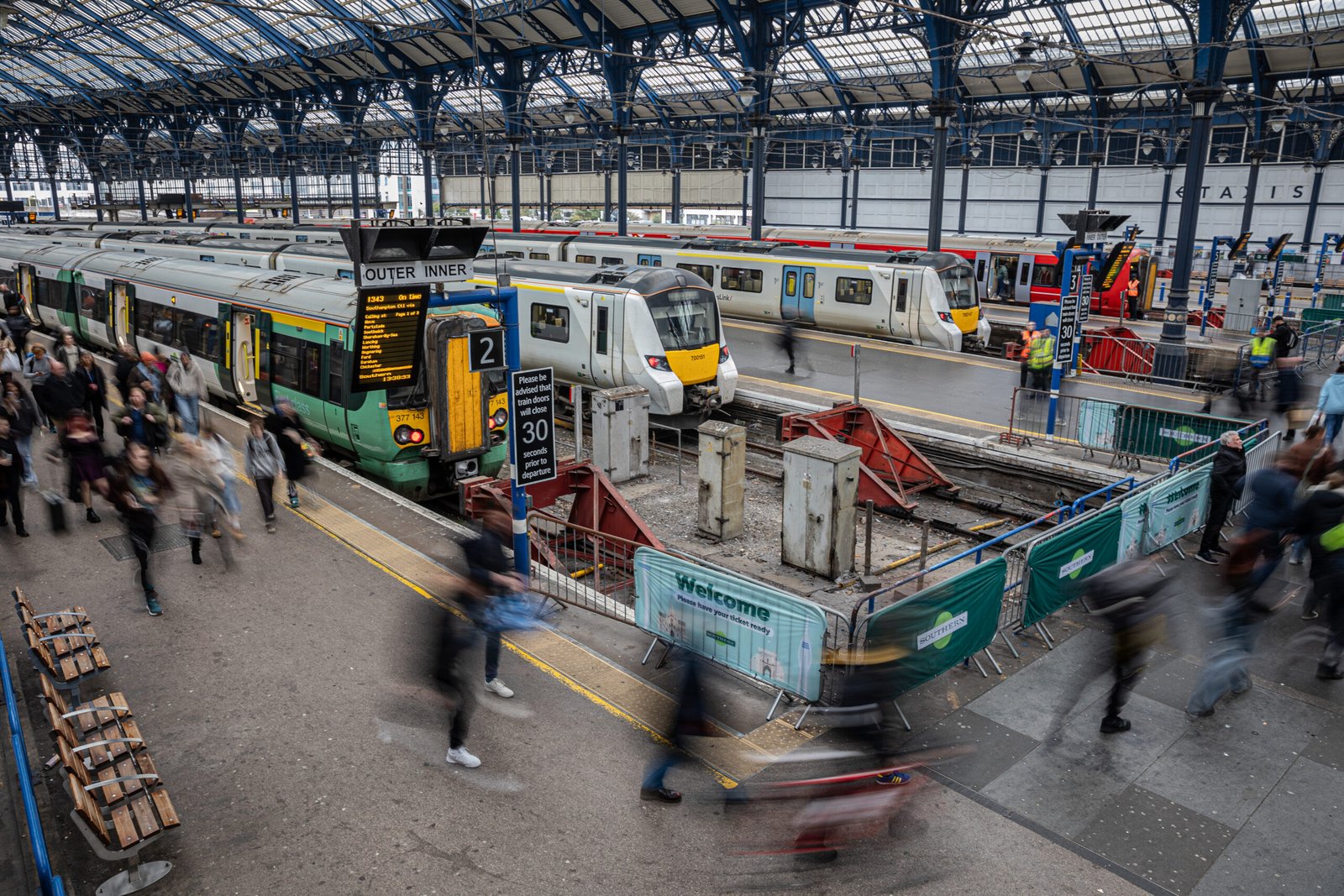
A rail communications failure disrupted Southern, Thameslink and Gatwick Express journeys across Sussex on Wednesday morning, affecting commuters and airport passengers travelling through Brighton, Gatwick Airport, Three Bridges and Redhill.
The fault meant passenger information systems could not accurately track train locations. Some services appeared delayed or not to have left their starting station even when they were moving, while other routes were suspended or altered.
Southern expected disruption to continue until at least midday. By the time of this update on Wednesday evening, the incident was no longer shown on National Rail’s live disruption page. Passengers making a later journey should still check live departures because a cleared network-wide fault does not rule out separate delays.
What happened to Brighton trains
The problem affected the communications system used to feed train locations into journey planners and station information boards. That made the disruption unusually confusing: passengers could not assume the display accurately reflected whether a train had departed, where it was or how late it was running.
During the fault, Gatwick Express services between Brighton and London Victoria were suspended. Thameslink services that normally run between Three Bridges and Bedford via Redhill were also suspended, while some London Bridge and East Croydon services were liable to last-minute changes.
Southern allowed affected passengers to use alternative Southern and Thameslink services. Tickets were also accepted on Metrobus route 100 between Three Bridges, Gatwick Airport and Redhill during the incident. That temporary acceptance arrangement should not be assumed to remain in force after the disruption has ended.
The disruption was reported locally by Brighton and Hove News, which published Southern’s service information and said dozens of trains were delayed, altered or cancelled. Network Rail engineers and telecoms teams were reported to be working on the fault.
Why the Brighton rail communications failure mattered locally
Brighton’s rail links are particularly exposed when information systems fail. The station is the meeting point for Southern coast services, Thameslink trains through central London and Gatwick Express services to Victoria. A single fault can therefore affect local commuters, university journeys, London travel and airport connections at the same time.
The information failure also mattered independently of any physical delay. When departure boards and apps cannot show a train’s true location, passengers have less time to choose another route, arrange childcare, contact an employer or protect an airport check-in deadline.
Airport passengers face the sharpest risk because a delayed rail journey can have consequences far beyond the ticket price. Train compensation does not automatically cover a missed flight, hotel or onward booking, so travellers should contact their airline or travel insurer separately if they suffered additional losses.
What residents need to know about Delay Repay
Southern’s official Delay Repay rules say passengers who reach their destination at least 15 minutes late because of a Southern delay or cancellation may be entitled to compensation. The claim must be submitted within 28 days of the journey. For wider travel rights, see our guide to the new cancelled-train ticket rule for Sussex passengers.
If you were affected on 23 September:
- Keep the original ticket, e-ticket or booking confirmation.
- Record the journey you intended to take and the time you actually arrived.
- Save screenshots of disruption messages or inaccurate departure information if you have them.
- Submit the claim only after completing the journey, using the actual delay at your destination.
- Make a separate claim for each traveller, unless Southern’s exceptions for a child or mitigating circumstances apply.
Contactless users can provide a journey statement showing where they touched in and out and the fare charged. Smartcard users will need the relevant card number, while paper and e-ticket holders can use the ticket itself or accepted booking evidence.
Brighton Locals’ view
The technical fault may have been temporary, but the loss of trustworthy passenger information is a serious operational weakness on a railway used by thousands of Sussex residents and airport travellers.
It is positive that alternative trains and Metrobus route 100 were accepted during the incident. However, that help is less effective when people cannot confidently tell whether their planned train is running. Network Rail and the operators should publish a clear explanation of the cause, how long accurate tracking was unavailable and what resilience exists if the same system fails again.
That is an editorial judgement based on the verified effects of the fault. No evidence available at the time of publication establishes the technical cause beyond a communications-system failure.
What to watch next
The next useful update would be a technical explanation from Network Rail or Govia Thameslink Railway, including whether the fault affected the railway’s operation itself or mainly the systems that track and display trains.
Passengers should also watch whether Delay Repay claims from the morning are processed consistently where the information system could not accurately show train movements. Evidence of rejected claims despite documented late arrival would materially change our assessment of the response.
Bottom line
The Brighton rail communications failure disrupted services and made live information unreliable during Wednesday’s morning travel period. The fault no longer appeared as a live National Rail incident by Wednesday evening, but anyone who reached their destination 15 minutes or more late should keep their evidence and claim within 28 days.

Leave a Reply