Last updated: 30 October 2026, 18:05 GMT.
Sea Link, National Grid’s proposed 2-gigawatt electricity connection between Suffolk and Kent, received government development consent on Friday 30 October 2026. The primarily offshore project is intended to help carry electricity across the network. Approval is a significant planning step, but it is not the same as the cable being built, operating or delivering a specified reduction in a household bill.
Sea Link approval: what changed today?
The Department for Energy Security and Net Zero announcement confirms approval for the National Grid scheme. Separately, the Planning Inspectorate’s decision notice records that development consent has been granted under the nationally significant infrastructure process.
The Inspectorate says the application was submitted on 27 March 2025, accepted for examination on 23 April that year and followed by recommendations to the Secretary of State on 30 July 2026. Its notice identifies a new converter station within 5km of the proposed Friston substation, connected by underground alternating-current cables. Those land-based elements are an important reminder that a mainly offshore link still requires works on land.
Why extra network capacity matters
Generating electricity and getting it to consumers are separate challenges. The government’s case is that improving transmission capacity helps move more domestically generated power to places that need it and reduces occasions when generators are paid to switch off because the network cannot carry their output.
That explains the purpose of the investment, rather than proving its final performance. A 2 GW transmission rating describes a capacity to move power. It is not a forecast that this amount will flow continuously, and the project does not itself generate the electricity. The government compares the capacity with the power requirements of around two million homes; readers should treat that as an equivalence, not a count of homes directly connected to a dedicated cable.
The local trade-off is part of the national story
The principal construction effects and community arrangements concern Suffolk and Kent. The government says National Grid will deliver community funds of more than £1 million each in the two counties under its community-benefits scheme. That is not a Sussex household payment or an offer that Brighton residents can apply for.
For readers here, the relevance is the wider electricity system and the balance between network investment, energy security and local construction impacts. A national benefit should not erase the need to inspect the route, land works and mitigation. Equally, a planning approval should not be mistaken for a promise about the date or size of a personal energy-bill reduction.
Brighton Locals’ view
Our judgement: improving the network’s ability to carry power is a credible infrastructure objective, and a published consent decision gives the debate something more concrete than an announcement of intent. The test now moves to delivery: the consent requirements, works programme, environmental protections and cost of completing the scheme. Approval alone cannot settle those questions.
What readers can check
Use the Planning Inspectorate notice to reach the project’s official document collection. Read the decision and examination recommendation alongside the government’s summary, especially if a property, business or community may be affected. The announcement does not provide an operational start date in the material reviewed for this report, so we are not supplying one.
Our guide to checking public decisions covers a different, local process, but the useful habit is the same: distinguish a proposal, the evidence considered and the final decision.
What happens next
The next evidence worth watching is the delivery programme and how the consent’s requirements are implemented. Published construction and commissioning milestones would allow a clearer assessment of when the promised network capability could become available. National Grid’s project page could not be independently loaded during our checks; the two government notices above are the directly inspected sources.
Sea Link has cleared a major planning stage. Its value to consumers still depends on what gets delivered.
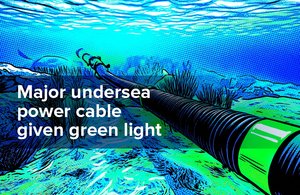
Editorial illustration: DESNZ / GOV.UK, 30 October 2026, Crown copyright, Open Government Licence v3.0. Not an installed-cable photograph.

Leave a Reply