Last updated: 11 October 2026, 6.20pm BST.
Microsoft-Decision-1, announced on 9 October 2026, is available in Microsoft Foundry public preview for developers building classification and routing tools. Its distinctive output is a score for each predefined answer option: a useful difference for software that must choose a next step.
What Microsoft-Decision-1 changes
Microsoft’s original announcement says it post-trained Qwen3.5-9B to provide probability scores across supplied options. Examples include yes/no choices, multiple-choice answers and grading against a rubric.
The separate Microsoft Foundry preview post describes applications including intent classification, data labelling and workflow routing. Both sources are from the supplier. They corroborate the product’s intended use and launch status, without providing independent evidence that it will outperform an organisation’s existing system.
Why this is useful to Brighton businesses
A possible local application is routing a customer enquiry among booking, billing and technical support. That is an illustrative use case, not a claim that a Brighton firm has deployed the product. Before selecting a model, a business must define the choices and what should happen when the evidence is ambiguous.
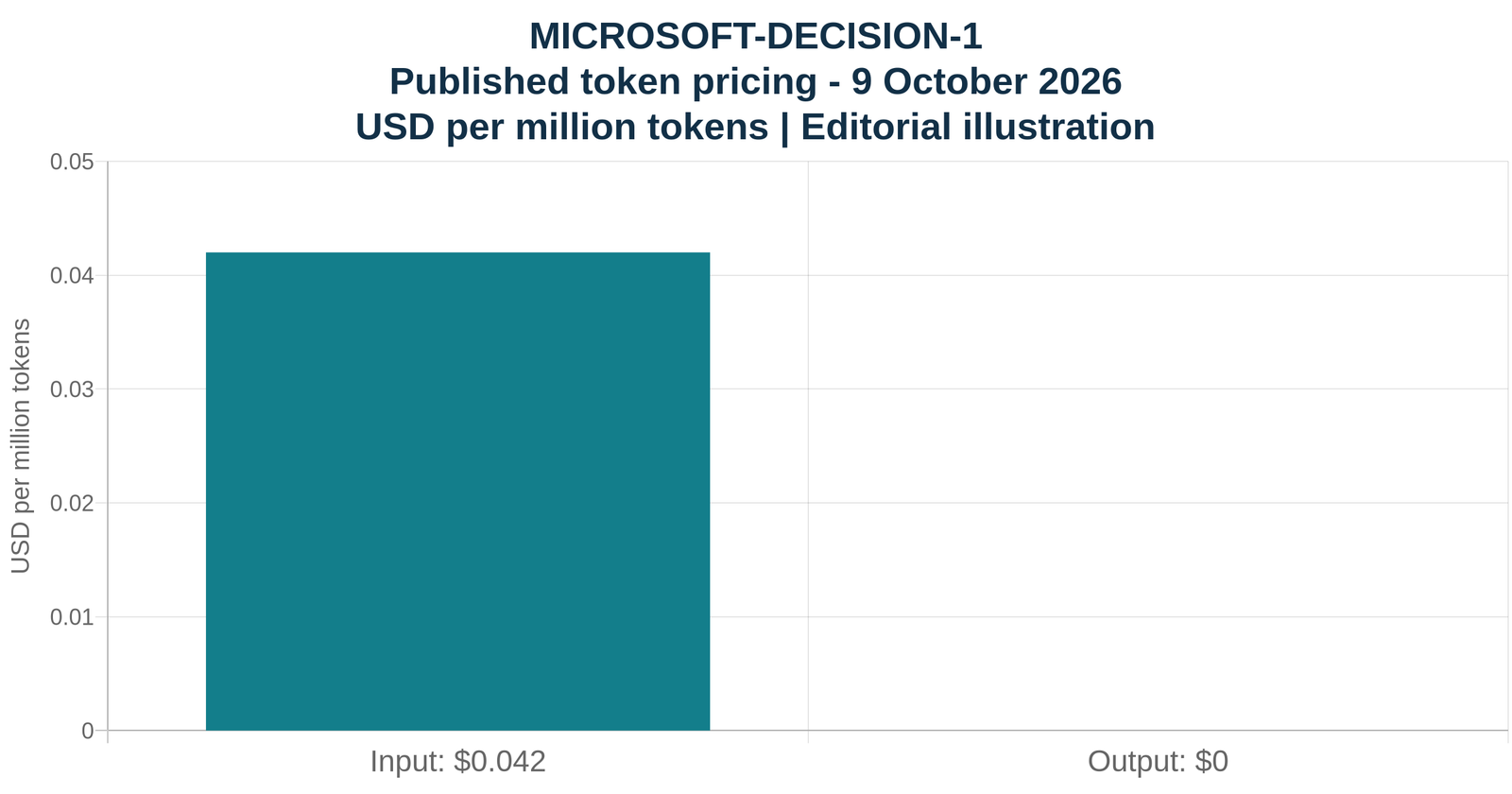
The low published token price also leaves unanswered questions about total operating cost. Integration, evaluation and reviewing errors still require work. An inexpensive prediction that sends an urgent enquiry to the wrong team can be a poor bargain.
What developers should do
Start with the official Foundry model listing and Microsoft’s linked documentation. For a pilot, use examples your organisation is permitted to process, with labels reviewed by people who understand the task. Keep a separate test set that was not used to tune the choices.
Measure the errors that matter: which enquiries went to the wrong queue, which uncertain cases needed a person, and whether the result remained useful when wording changed. Keep a human review route for consequential decisions. A confidence score does not itself grant an application permission to take an action.
Brighton Locals’ view
Editorial judgement: A specialised model for fixed choices could make some workflows simpler. The credible next step is a measured pilot against an existing process. Supplier benchmark claims are a starting point for testing, not sufficient grounds to replace a working service.
What happens next?
Watch for changes to preview availability, pricing and documented model behaviour. Independent evaluations on representative workloads would strengthen the case for wider adoption. Our GPT-6 interface rollout explainer covers a separate development in consumer AI.
Bottom line
Choose the model around a well-defined decision, then test whether its mistakes are acceptable.
Featured image: Editorial illustration by Brighton Locals of Microsoft’s published input and output token prices in US dollars per million tokens. It illustrates pricing, not independently measured performance.

Leave a Reply