Last updated: 5 October 2026 at 22:40 BST.
In short
- More than 7,000 people took part in University Hospitals Sussex research between April 2025 and March 2026.
- UHSussex says participation rose 38% year on year and placed the trust in the top quarter of NHS acute trusts nationally.
- A £1.3 million programme is expanding research facilities at hospitals in Brighton, Haywards Heath, Worthing and Chichester.
- Adults in the UK can register with the NIHR to hear about suitable studies, but registration does not guarantee a place or access to a treatment.
- The next test is whether opportunities become easier to reach in community, mental-health, coastal and rural settings.
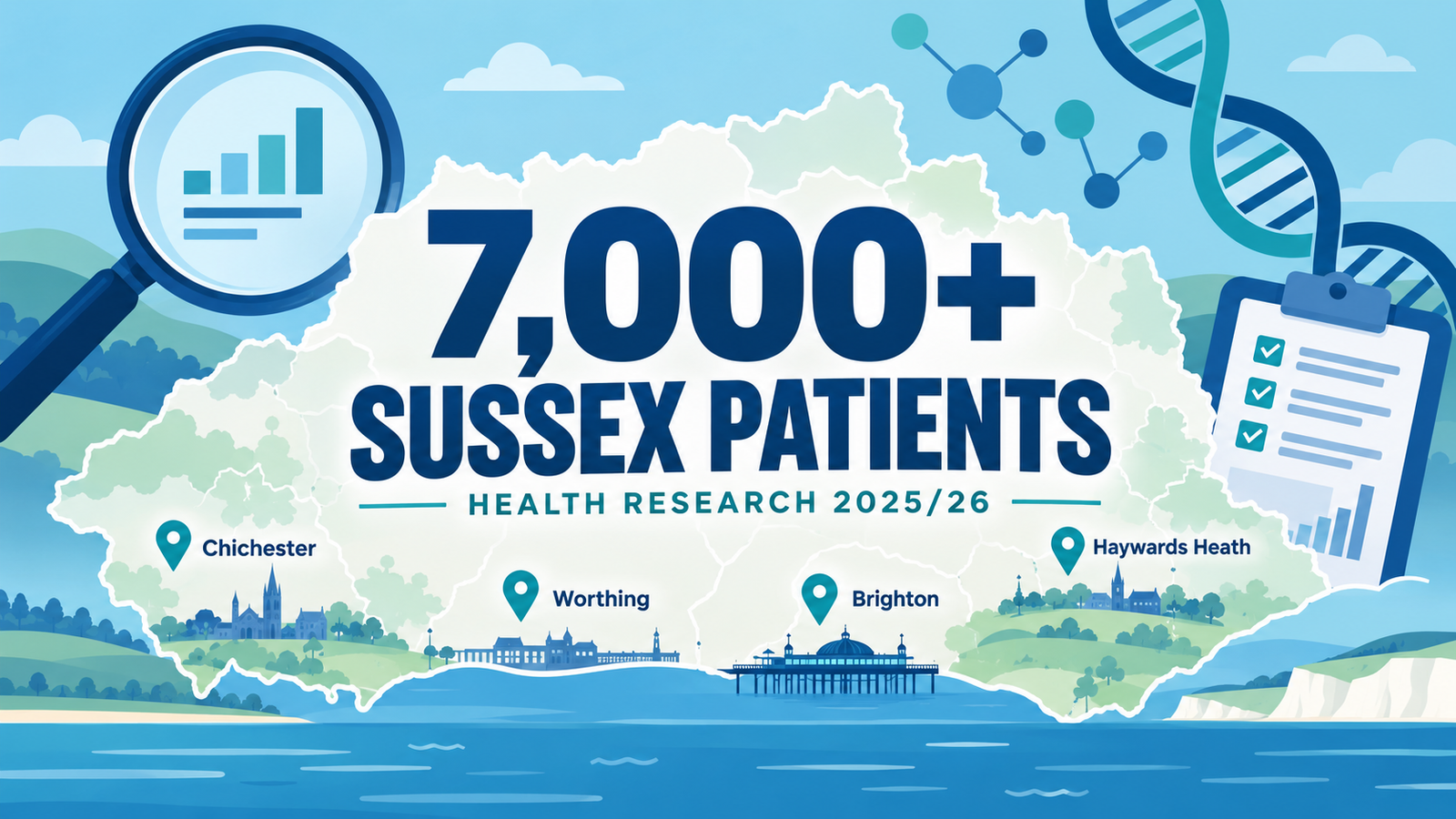
More than 7,000 Sussex patients took part in health research run through University Hospitals Sussex during 2025/26, according to figures published by the NHS trust on Monday 5 October. The increase could mean more local access to trials, diagnostics and research-led care, but the headline number measures participation rather than clinical success.
What the Sussex health research figures show
The UHSussex update, based on its Research and Innovation Annual Review for April 2025 to March 2026, reports a 38% rise in participants from the previous year. It says the trust is now among the top 25% of NHS acute trusts for patient participation and the top 20% for studies actively recruiting.
Research covered cancer, cardiology, critical care, newborn and children’s health, neurology, reproductive health, dermatology and infectious diseases. Examples cited by the trust include a heart-attack trial at the Royal Sussex County Hospital, prostate-cancer treatment studies, less invasive diagnostic techniques and whole-genome sequencing for newborn babies.
Those examples are important, but they should not be read as a promise that every participant receives a new treatment or experiences a better outcome. Some studies observe care, test diagnostics or compare existing approaches. Eligibility is set study by study, and informed consent remains essential.
Where the £1.3 million investment is going
UHSussex says £1.3 million from the National Institute for Health and Care Research is supporting new or improved research facilities at the Royal Sussex County Hospital in Brighton, Princess Royal Hospital in Haywards Heath, Worthing Hospital and St Richard’s Hospital in Chichester.
The trust’s original March funding announcement described a 180-square-metre patient-facing research facility in the Louisa Martindale Building in Brighton, alongside bases at Princess Royal and Worthing. The latest update also lists St Richard’s among the hospitals supporting larger and more complex studies.
Between April and June 2026, the Sussex Commercial Research Delivery Centre set up 33 industry-sponsored studies, with a median opening time of 36 days, and enabled 182 people to participate. UHSussex says its next phase will place more research in community locations and GP practices, with greater attention to mental health and access for coastal and rural communities.
Why it matters locally
For Brighton and Sussex residents, location can determine whether taking part is realistic. Repeated trips, time away from work, caring responsibilities and transport costs can all narrow access even when a study is technically open. Moving some research beyond central hospital sites could therefore matter as much as increasing the total number of trials.
The trust’s growth is encouraging, particularly where it brings specialist research closer to patients. But the published total does not yet show how participation is distributed between Brighton, Mid Sussex, West Sussex and coastal communities, or whether groups historically under-represented in research are gaining equal access.
Brighton Locals’ view
Our judgement: the rise in participation is positive, but success should be judged by more than a large annual total. UHSussex should publish clear site-by-site access data, explain who is being reached and report whether community expansion reduces travel and exclusion. Participation is an opportunity to contribute to better care; it is not evidence by itself that every trial or treatment works.
How to register for Sussex health research
- Visit the NIHR’s free Be Part of Research service. You must be 18 or over and live in the UK to create an account.
- Register with an email address or NHS login, then choose the health conditions and research areas that interest you.
- The service may email you about approved studies that match your details. A research team will still check eligibility and explain the study before you decide.
- Taking part is voluntary. Most studies are unpaid, although some may reimburse travel or other reasonable expenses; ask the study team before agreeing.
- Registration is not a route for urgent treatment or a second clinical opinion. For concerns about deterioration during current hospital care, see our separate guide to Martha’s Rule in Sussex.
What to watch next
Residents should look for firm opening dates for the upgraded research facilities, details of studies offered through GP and community settings, and evidence that coastal, rural and mental-health participation is genuinely widening. Data on recruitment, completion, withdrawals, patient experience and travel burden would materially strengthen the trust’s case.
Bottom line
Sussex is recruiting substantially more people into health research, with new facilities intended to bring complex studies closer to home. The next challenge is proving that access is broad, practical and fair across the county.
Featured image: Brighton Locals editorial illustration based on verified UHSussex participation figures and hospital locations. It is not a photograph of a clinical study or patient.

Leave a Reply