Last updated: 29 September 2026, 7.25am BST
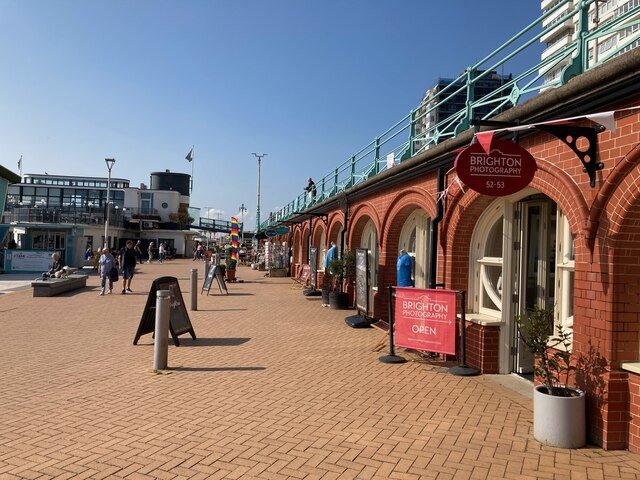
King’s Road Arches and the lower promenade in Brighton, photographed on 21 September 2024. Photo: Chris Holifield / Geograph, licensed CC BY-SA 2.0. The image predates the current strengthening work.
At a glance
- Brighton & Hove City Council says the next major phase of work on the King’s Road seafront arches will begin within the coming weeks.
- Phase 4 covers the stretch between Brighton Bandstand and the i360; Phase 5 moves to arches west of Shelter Hall.
- The Department for Transport is providing more than £22 million, with the council contributing £3.9 million.
- The King’s Road paddling pool area, playground and nearby public toilets are affected during Phase 4; a consultation on the future facility is due later in 2026.
- An exact site-start date and detailed temporary access arrangements had not been published when this article was updated.
Major Brighton seafront arches work is due to start on King’s Road within weeks, after the council confirmed on Monday 28 September that the next stages of a long-running strengthening programme are ready to move forward.
The project is not a cosmetic refurbishment. The Victorian arches support the A259, pavement and cycle lane above them. Phase 4 will focus on the area between Brighton Bandstand and the i360, before Phase 5 moves to the section west of Shelter Hall.
What happened
In its latest project announcement, Brighton & Hove City Council said work to restore and strengthen a major section of the historic seafront arches would begin in the coming weeks.
The start follows a February 2026 cabinet decision approving a capital budget of £24.85 million for phases 4 and 5. The wider funding package includes more than £22 million from the Department for Transport and a further £3.9 million from the council, including borrowing.
The council’s seafront arches project page says Phase 4 covers the area between the Bandstand and the i360. Phase 5 will then move to arches west of Shelter Hall. The work is intended to keep the structures and the road above safe and usable for another century, while creating improved commercial space at beach level.
Brighton and Hove News reported from the cabinet papers in February that some unrestored arches were already cracking and could become unusable within ten years without intervention. The same report recalled the 2014 collapse of the arch occupied by the Fortune of War pub, which forced a lengthy road closure.
What closes and what remains unclear
The King’s Road paddling pool has remained closed for the 2026 season because of the project. The playground and public toilets in the Phase 4 area are also expected to close while the work takes place.
The council is carrying out a feasibility study on the future of the paddling-pool area and says a public consultation will be held later in 2026. Its stated aim is to have a new facility operating in 2027, but the final design has not yet been chosen.
There is an important limit to the current announcement. The council has confirmed that construction is approaching, but had not published an exact mobilisation date, a day-by-day pedestrian or cycle diversion plan, or a fresh completion date for each phase when Brighton Locals checked. Residents should not assume a full closure of the A259, but nor should they rely on older traffic arrangements until the council issues the current plan.
Why the Brighton seafront arches work matters locally
King’s Road is one of Brighton’s busiest corridors. Council figures used in the project papers put average daily use at more than 25,000 vehicles and about 2,100 cyclists. A structural failure would therefore affect far more than the businesses occupying individual arches: it could disrupt a strategic east-west route, the seafront cycle lane and walking access along the beach.
The project also creates a difficult local trade-off. Strengthening the structure is necessary, but construction fencing and temporary access changes can reduce footfall for seafront traders. Families also lose a popular play and paddling area while the work is under way. The benefit is long-term safety and usable business space; the immediate cost is disruption in one of the city’s most visited public areas.
This scheme is separate from the Madeira Terrace restoration east of Brighton Palace Pier. Both concern ageing seafront infrastructure, but they cover different structures, locations and funding programmes.
Brighton Locals’ view
Our judgement: the work appears necessary and overdue. The evidence of cracking, the 2014 collapse and the volume of traffic carried above the arches make delay a greater risk than carefully managed construction.
The funding settlement is also positive for Brighton because most of the cost comes from a national transport grant. But “starting in the coming weeks” is not enough practical detail for residents or neighbouring businesses. The council should publish a clear access map, site timetable and contact route before fencing materially changes the promenade.
Success should be measured by more than finishing the engineering. The project must keep safe pedestrian and cycle routes, minimise avoidable disruption to traders, and turn the paddling-pool consultation into a credible, accessible facility rather than allowing the temporary closure to become indefinite.
What residents need to know
- Walking or cycling: expect local route changes between the Bandstand and i360 once site preparation begins. Follow signed diversions and check the council’s project page before making an accessibility-sensitive journey.
- Families: do not plan around the King’s Road paddling pool or playground being available during Phase 4. Watch for the promised public consultation later in 2026.
- Drivers: no new full A259 closure was confirmed in the announcement. Check the council’s travel and road-closures information before visiting once work starts.
- Visiting a seafront business: check the venue directly for its current entrance and opening arrangements, as access may differ from arch to arch.
- Questions about the scheme: use the official seafront arches project page rather than relying on older maps or social-media posts.
What to watch next
The next meaningful update should provide the exact start date and temporary access plan. Brighton Locals will also watch for the paddling-pool consultation, the timetable for Phase 5 and any change to the 2027 target for a replacement family facility.
Evidence that would change our positive assessment includes a significant cost increase without explanation, prolonged loss of safe access, or a delay to the replacement facility without a revised timetable. Clear sequencing and regular public progress reports would strengthen confidence.
Bottom line
The council is moving from funding approval to physical work on a critical part of Brighton’s seafront. The engineering case is strong; the immediate test is whether disruption between the Bandstand and i360 is managed with the same care as the arches themselves.

Leave a Reply