Last updated: 23 September 2026 at 10:20am
In short
- East Sussex County Council says it is likely to need further exceptional government-backed borrowing next year to keep essential services running.
- The council says spending on adult and children’s social care is expected to rise from £468 million last year to £560 million next year, then £605 million the year after.
- A government-commissioned CIPFA review describes the council’s financial position as “highly fragile”, despite finding its financial management sound.
- No immediate service cuts or council tax changes were announced in Tuesday’s update.
- The next important public checkpoint is the council’s Cabinet meeting on 29 September.
East Sussex council borrowing is likely to continue into the next financial year as the cost of adult and children’s social care rises sharply, the county council’s leader has warned.
In an update published on Tuesday 22 September, council leader Andy Woolley said the authority would probably need to continue using Exceptional Financial Support, a government process that allows councils to fund day-to-day pressures through capital resources, including borrowing.
The warning matters across Lewes, Peacehaven, Newhaven, Eastbourne, Hastings, Wealden and Rother because the county council is responsible for adult social care, children’s services, support for pupils with special educational needs and disabilities, home-to-school transport and much of the local road network.
What East Sussex County Council has said
The council says it spent £468 million last year on adult social care, children and family support, SEND services and home-to-school transport. It expects that combined figure to rise to £560 million next year and £605 million the following year.
Mr Woolley said the authority had received permission to use around £55 million of exceptional support and was likely to need further borrowing in the next financial year to keep essential services operating. He also said officers were examining contracts, agency and consultancy spending, technology and council assets as part of the next budget.
His statement did not announce specific service reductions, changes to eligibility, a council tax increase or the sale of any named asset. He said he did not expect “large reductions in services”, but that is an expressed expectation rather than a settled budget decision.
The council’s programme is due to take further shape over the next four months, with decisions going through public Cabinet and full council meetings.
East Sussex council borrowing: what the independent review found
The latest government figures show that East Sussex received £70 million of Exceptional Financial Support in principle for 2026/27. A CIPFA external assurance review, commissioned as a condition of that support, says £55.631 million was budgeted for use this year, with £14.369 million held as contingency.
CIPFA found that the council has sound financial management and has delivered more than £150 million of savings since 2010. However, it also described the authority’s overall financial sustainability as highly fragile because funding has not kept pace with demand.
The review estimated that a further £74.173 million of exceptional support could be required in 2027/28. It rated the continuing need for that support as a high risk and warned that borrowing costs would reduce the council’s future flexibility.
The same review points to the county’s demographics as part of the pressure: 26.64% of East Sussex residents are aged over 65, compared with 19% across England. It also identifies high levels of mental health need, deprivation and multimorbidity, alongside infrastructure and workforce challenges.
Why this matters locally
Exceptional support can prevent an immediate budget failure, but it does not remove the underlying gap between income and the cost of services. Borrowing also creates future interest and repayment costs, which means less room in later budgets for roads, prevention work and discretionary services.
For families and vulnerable residents, the key question is not simply whether the council can balance one year’s accounts. It is whether demand for social care, SEND support and school transport can be met without repeated emergency financing or a gradual reduction in service quality.
For council tax payers, there is no new bill to act on today. But the scale of the figures means the February 2027 budget and any savings proposals will deserve close attention.
Brighton Locals’ view
Our assessment: this is a serious structural warning, not evidence that East Sussex has suddenly “gone bankrupt”. The independent review credits the council with sound controls and a long record of savings, while also saying its finances remain highly fragile.
Exceptional support is understandable when demand rises faster than funding, but repeated borrowing to pay for everyday services is not a durable solution. The council should publish the full cost of interest and repayments alongside every future savings proposal, so residents can see how much of tomorrow’s budget is being consumed by today’s gap.
The most useful next step would be a clear service-by-service plan showing what can be protected, what can genuinely be made more efficient and what additional funding is required. General promises about technology or contract management will not be enough without measurable savings and service outcomes.
What to watch next
- 29 September: East Sussex County Council’s Cabinet is due to consider the next stage of its policy, performance and resources process.
- 30 September: CIPFA recommended updated medium-term financial projections by this date.
- By 31 December: the review says the council should report explicitly on interest and minimum revenue provision costs linked to exceptional borrowing.
- Early 2027: the formal 2027/28 budget should reveal any proposed savings, council tax changes or further request for Exceptional Financial Support.
What residents need to know
No immediate application, payment or service-change deadline has been announced. Residents who rely on social care, SEND provision or school transport should continue using their existing service contacts.
Anyone who wants to follow the decisions can read the council leader’s 22 September update and the published papers for the 29 September Cabinet meeting. The figures may change as the budget is refined, so confirmed proposals should be judged against the final papers rather than political statements alone.
Bottom line
East Sussex can balance this year’s budget with exceptional support, but the independent evidence says the underlying pressure continues. The real test is whether the council can protect essential services while reducing its reliance on borrowing in 2027 and beyond.
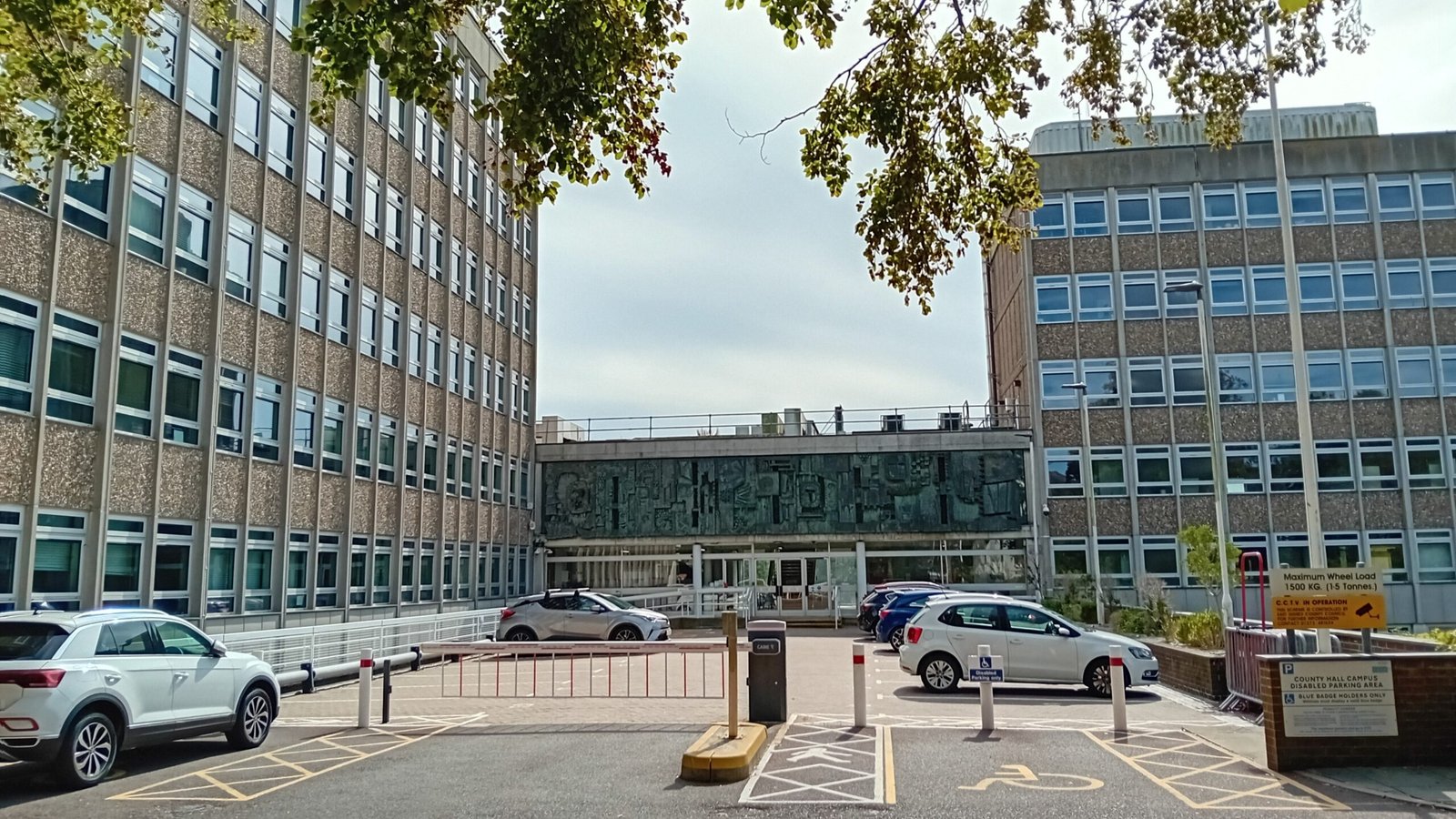
Featured image: East Sussex County Hall in Lewes. Photograph by Richard Kelly, via Wikimedia Commons, licensed under CC BY-SA 4.0. No material changes made.

Leave a Reply