Practical details checked: 8 November 2026.
This Steyning Museum guide brings together the essentials for a free West Sussex outing, plus a less obvious reason Brighton and Hove residents might use its advice: an old record labelled “Steyning” may not refer to the town itself.
Steyning Museum guide: plan the visit first
The museum’s official visiting page is the starting point for current opening arrangements. The independent local YourMag listing also gives Wednesday–Sunday, 10am–4pm. For an unusual journey or a visit that depends on a particular facility, confirm directly on 01903 813333 rather than relying on an old listing.
The entrance approach is from Church Street beside Penfold Hall, opposite St Andrew’s Church. The museum says it can accommodate wheelchairs and prams. That is useful information, but it does not give every measurement a visitor might need. If access depends on a particular chair, turning space or assistance, contact the museum with that specific question before travelling.
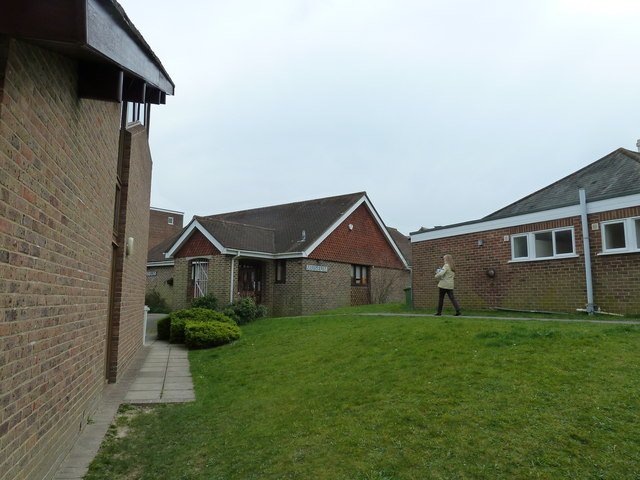
The photograph accompanying this guide dates from 12 March 2011. It shows the museum entrance; it should not be used to judge current paths, doors or temporary access arrangements.
What is there to explore?
The museum’s permanent-exhibits page lists objects ranging from an ammonite and a flint scraper to a Roman pot, a Saxon brooch and a Victorian pram. These give a visit more range than a single-period collection. Check directly if seeing one particular object is the main purpose of your trip.
A useful way to approach a small local museum is to choose a question rather than rush through a checklist. How did everyday work change? Which objects were made locally, and which arrived through trade? What can an object establish, and what remains an interpretation? Those are suggested ways to look, rather than claims about a particular display or a first-hand review.
The family-history detail Brighton readers should know
The museum’s family-history guidance explains that the Steyning registration district operated from 1837 to 1935 and covered a much wider area, including Hove, Portslade, Aldrington and Preston. A birth, marriage or death index naming Steyning therefore does not, by itself, locate an event in the town.
That distinction changes where to look next. Separate the registration district in an index from the actual parish or address recorded in the underlying document. Otherwise, a promising search can send you towards the wrong local collection.
The museum’s research focus is its own locality, including Steyning, Bramber, Upper Beeding, Wiston and Ashurst. It should not be treated as the archive for every place once included in that registration district. Our guide to The Keep in Brighton is a useful next starting point for planning research into the wider area.
For a museum research enquiry, use familyhistory@steyningmuseum.org.uk. Send the person’s name, approximate date, known place and the question you are trying to answer. If you hope to consult someone in person, propose a date before booking the journey; specialist help should not be assumed to be available whenever the doors are open.
Getting there from Brighton
Travel update, 8 November: the operator lists a Shoreham diversion from 7 November onwards because of A283 roadworks by Swiss Cottage. Route 2 journeys to and from Steyning miss stops in that area. Check the live route notice before choosing a boarding point; the notice does not give a firm end date.
The museum identifies Brighton & Hove Buses route 2 as a link from Brighton and Shoreham, serving Steyning High Street. Use the operator’s route 2 timetable and service updates for your exact outward and return journeys. A route number alone does not confirm Sunday frequency or the last bus.
Drivers can check the Cuthman’s Field parking area nearby. The museum identifies toilets and a playground in that area, but this guide does not assume parking is free or guarantee availability.
Brighton Locals’ view
Editorial assessment: free admission makes this an appealing focused outing. Its wider value for Brighton readers is the reminder that historical administrative boundaries can mislead. Plan the visit around what you want to learn, and ask a precise archive question before making a dedicated research trip.
A Steyning label is a starting clue, not proof that your family lived in Steyning.
Image: Archive: entrance to Steyning Museum, 12 March 2011. Basher Eyre / Geograph via Wikimedia Commons, CC BY-SA 2.0. Resized for display under the same licence; not evidence of present-day access conditions.


Leave a Reply