Practical details checked: 11 November 2026.
At a glance
- Bramber Castle is a free English Heritage site at Castle Lane, Bramber, West Sussex, BN44 3EW.
- The published visiting rule is any reasonable time during daylight hours.
- The castle car park is currently closed for safety; do not plan around its normal £2 charge.
- The unpaved approach may be muddy, rutted and unsuitable for some wheelchair users or people with limited mobility.
This Bramber Castle guide starts with the detail most likely to change a day out: English Heritage currently says its car park is closed. The ruins remain a free daylight destination, but getting to them deserves more thought than entering the postcode into a satnav.
For Brighton and Hove readers looking towards the Adur valley, the attraction is a chance to understand a major piece of Sussex history without committing to a ticketed indoor visit. This is a sourced planning guide, not a claim that we have inspected the paths or facilities in person.
Bramber Castle guide: plan the approach first
The current closure notice directs drivers to a village car park across from The Castle Inn, a short walk away. The same English Heritage page still carries its standard on-site parking information. The explicit closure notice takes precedence for planning a visit; the usual payment text should not be taken as evidence that the castle car park has reopened.
Allow for the walk from the village when deciding whether the visit suits your party. If mobility or vehicle access is essential, get a current answer from English Heritage rather than relying on an archive photograph. Its opening-times page gives the enquiry number 0370 333 1181.
Daylight access is flexible, but it is not an invitation to arrive after dark. Choose a finish time that leaves room for the return walk, especially in November. For public transport, check an up-to-date journey plan for your actual date; an old temporary diversion notice is not a current timetable.
Look for the castle’s shape, not an intact building
English Heritage’s history places the foundation by William de Braose by 1073. The castle served both defence and administration in one of the territorial divisions of Norman Sussex. Its elevated position above the Adur helps explain why this location mattered.
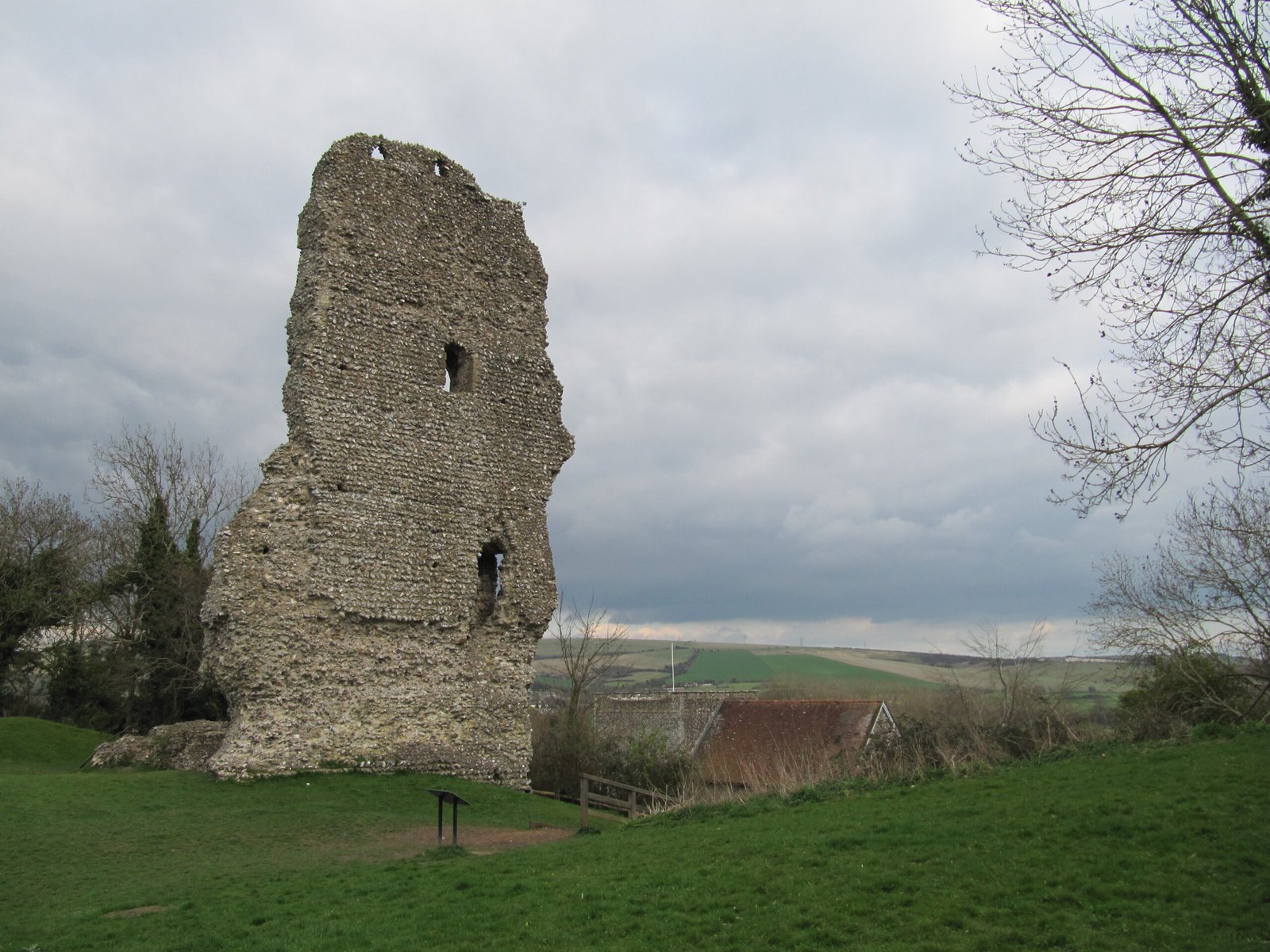
The site rewards a little preparation because much of its story is in the ground and surviving fragments. The motte is the raised mound associated with the early castle, while the bailey was its enclosed working and living space. Later stone construction changed the arrangement. The surviving tower wall rises to about 14 metres.
Historic England’s scheduled-monument record independently describes the transition from a motte-and-bailey castle to a form relying on its enclosing defences. It also records large-scale subsidence contributing to the castle’s ruin in the 16th century. A ruin is therefore evidence of several phases, rather than a complete snapshot of one Norman building.
A useful family activity is to compare the high mound, entrance and wall remains with the official phased plan. Download it before leaving and use it to ask what each surviving feature once did. There is no need to invent rooms or a reconstruction to make the visit interesting.
Access, dogs and a sensible winter visit
English Heritage warns of steep slopes, uneven ground, drops and falling masonry. Its approach can become rutted or muddy after rain. Choose footwear for the surface, keep children close around edges, and respect any barriers. Dogs are welcome on leads.
For anyone deciding between an outdoor ruin and an indoor local-history stop, our Steyning Museum guide sets out a nearby alternative. Check that museum’s opening days before making it part of the same trip; proximity does not guarantee it will be open.
Brighton Locals’ view
Our assessment: Bramber is a worthwhile choice for readers interested in how Sussex’s landscape and power structures developed. Its free access is a strength, but the uneven approach and current parking closure are material constraints. Plan for those first and the history becomes much easier to enjoy.
Before you leave
Recheck the English Heritage closure notice and daylight opening rule on your travel day. Ask about access if your visit depends on a particular mobility arrangement. Treat the 2015 image here as a view of the monument, not evidence of today’s surfaces.
Bramber’s appeal lies in reading a castle from its surviving outline. Give the approach as much attention as the ruins.
Image: gatehouse tower wall, Bramber Castle, 4 April 2015. Archive photograph by David Tyers / Geograph, CC BY-SA 2.0. WordPress supplies resized and cropped versions.


Leave a Reply