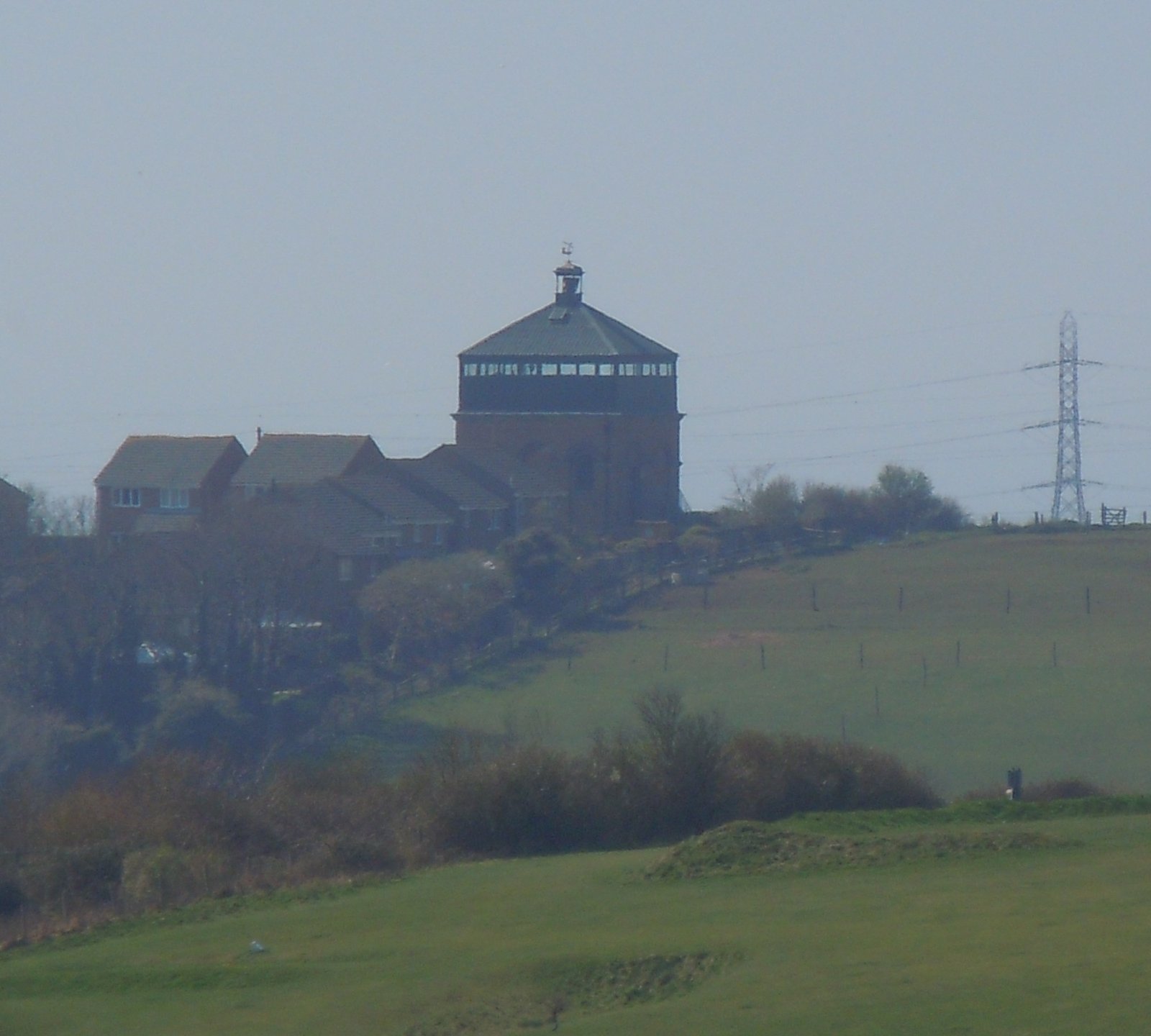
Foredown Tower Portslade brings together two unlikely uses for one building: storing water for a hospital and projecting the surrounding landscape into a darkened room. Understanding that change makes the tower more interesting than a viewpoint alone. It is also a place where a little planning matters: the operator describes a 47-step spiral staircase to the viewing gallery.
Sources and practical details checked: 3 November 2026. This is a researched local feature, not a first-hand visit or a promise that demonstrations are running on a particular date.
At a glance
- The tower stands on Foredown Road in Portslade.
- It was built in 1909 to serve Foredown Isolation Hospital.
- Aldridge Adult Learning describes a visitor and learning centre with a camera obscura, small café and garden.
- The viewing gallery is reached by 47 spiral steps.
- Confirm demonstration dates, admission and access directly before travelling.
Foredown Tower Portslade: a building with a second life
The Hove Civic Society’s historical account places the hospital’s origins in 1883 and dates the water tower to 1909. It describes a 27,500-gallon tank and substantial supporting walls. The tower survived the hospital’s later demolition, along with some other remnants of the site.
The same account dates the camera obscura opening to 1991. Its importance is not simply that an old structure was preserved: a utilitarian building acquired another public purpose. Water storage and optical viewing both made use of its height, but for very different reasons.
That is a useful way to read the exterior before thinking about the attraction inside. Instead of treating the tower as an isolated curiosity, look at it as evidence of how Portslade’s landscape and public services have changed. The historical account is a source for that story; its old telephone and visitor links should not be used as current booking information.
A live image, without a digital screen
A camera obscura forms an image by directing light from outside into a dark space. The University of Oxford’s History of Science Museum explains the principle through a lens-and-mirror example: light is focused and reflected onto a surface, allowing the scene to be seen inside. The optical process itself does not require an electronic display.
This is different from taking a photograph. A projected view changes as the scene changes; recording and preserving that view requires another process. Oxford’s explanation connects this distinction to the development of photography, when light-sensitive materials made it possible to retain an image.
For a family conversation, our suggestion is to start with two questions: where is the light entering, and where is the picture appearing? Then ask what would be needed to keep that image after the light changed. Those questions give children something concrete to investigate without needing a long technical introduction.
The access question to settle first
Aldridge Adult Learning’s tower page describes the top-floor gallery and its 47-step spiral staircase. That is a material planning detail for anyone with mobility limitations, a pushchair or difficulty with enclosed stairs. It should not be softened into a general claim that the complete attraction is accessible.
The operator also describes a small café and garden. Their presence does not establish that they are available whenever the building is used for classes, or that every visitor facility follows the same timetable. Ask about the part of the experience you actually want, rather than relying on a directory’s general opening label.
Before arranging a visit
Our Foredown Tower directory entry brings together the operator link and tower contact details.
The current operator page does not provide a dated public-demonstration timetable or an admission tariff in the information we checked. Contact foredown@aal.org.uk or 01273 415625, the tower contact details published by Aldridge, to confirm the date, demonstration arrangements, price and access. We have not contacted the volunteers or made a booking.
For travel, plan to the Portslade address rather than assuming a central Brighton location. Check the return journey too. Our Brighton bus payment guide explains card and device choices if the local bus operator is part of your route.
Brighton Locals’ view
Editorial judgement: the tower’s appeal is the combination of local infrastructure history and a visible scientific idea. A visit is most useful when the demonstration and stair access suit the visitor. Clear confirmation from the operator is more valuable than promising an all-day attraction from undated listings.
Bottom line: Foredown offers a way to understand both Portslade’s past and how images are made. Arrange the practical details first, then give the building and the science equal attention.
Image: Archive: Foredown Tower, Portslade, 6 April 2015. Hassocks5489 / Wikimedia Commons, CC0 1.0. Not a record of current opening or a recent visit.


Leave a Reply