Last updated: 14 October 2026, 6:11am BST.
The UN 2027 budget proposal presented by António Guterres in New York on 13 October 2026 totals $3.3 billion, $40.8 million below the approved 2026 level. It is a proposal submitted to the General Assembly’s administrative and budgetary committee, not a final settlement already adopted by member states.
In short
- The proposed programme budget is $3.3bn for 2027.
- The UN reports a $40.8m, or 1.2%, reduction against the approved 2026 budget.
- The presentation took place on 13 October before the Fifth Committee.
- Spending reforms and timely payment of national dues are separate issues.
What is new in the UN 2027 budget proposal?
The UN’s own dated announcement confirms the headline amount and reduction. The accompanying UN News report republished by Global Issues describes proposed relocations across 12 entities, with the largest going to Nairobi, and the downgrading of 14 senior positions. That is not a claim that only 14 jobs are affected.
UN News also reports that standard-cost adjustments are built into the proposal upfront, avoiding a separate recosting later in the year. Guterres warned that efficiencies cannot by themselves resolve unstable financing and late payment of dues.
Why the distinction matters
A budget sets a spending framework; cashflow concerns when funds are actually available. Reducing the proposed total cannot, by itself, demonstrate that outstanding contributions have been paid. Likewise, an announced reorganisation does not yet prove that work will be delivered as effectively in a different location.
This has international significance, but we have not identified a confirmed Brighton council, NHS or household-finance consequence. Readers should not infer a local service cut from the global headline.
Brighton Locals’ view
Our judgement is that the efficiency case should be tested against operational results, not the smaller total alone. If functions can be moved without weakening delivery, reform may be useful. If savings leave obligations harder to fulfil, the headline reduction would be a poor measure of success. Both are assessments to test, not outcomes established by this announcement.
What to watch next
The next evidence is member-state consideration, amendments and an adopted budget, followed by actual implementation and payments. Use the Fifth Committee’s document list to follow the proposal rather than assuming an announced figure is final. No final vote date was verified for this report.
Source and access note
The original UN News article, budget-document page and Secretary-General’s statement were not fully accessible in our checks. We verified the official dated announcement and read the clearly attributed UN News republication. Global Issues is an additional access route, not independent corroboration or evidence of popularity.
Bottom line: a smaller proposed budget and reliable financing are two different tests, and neither should be declared settled yet.
Featured image and source
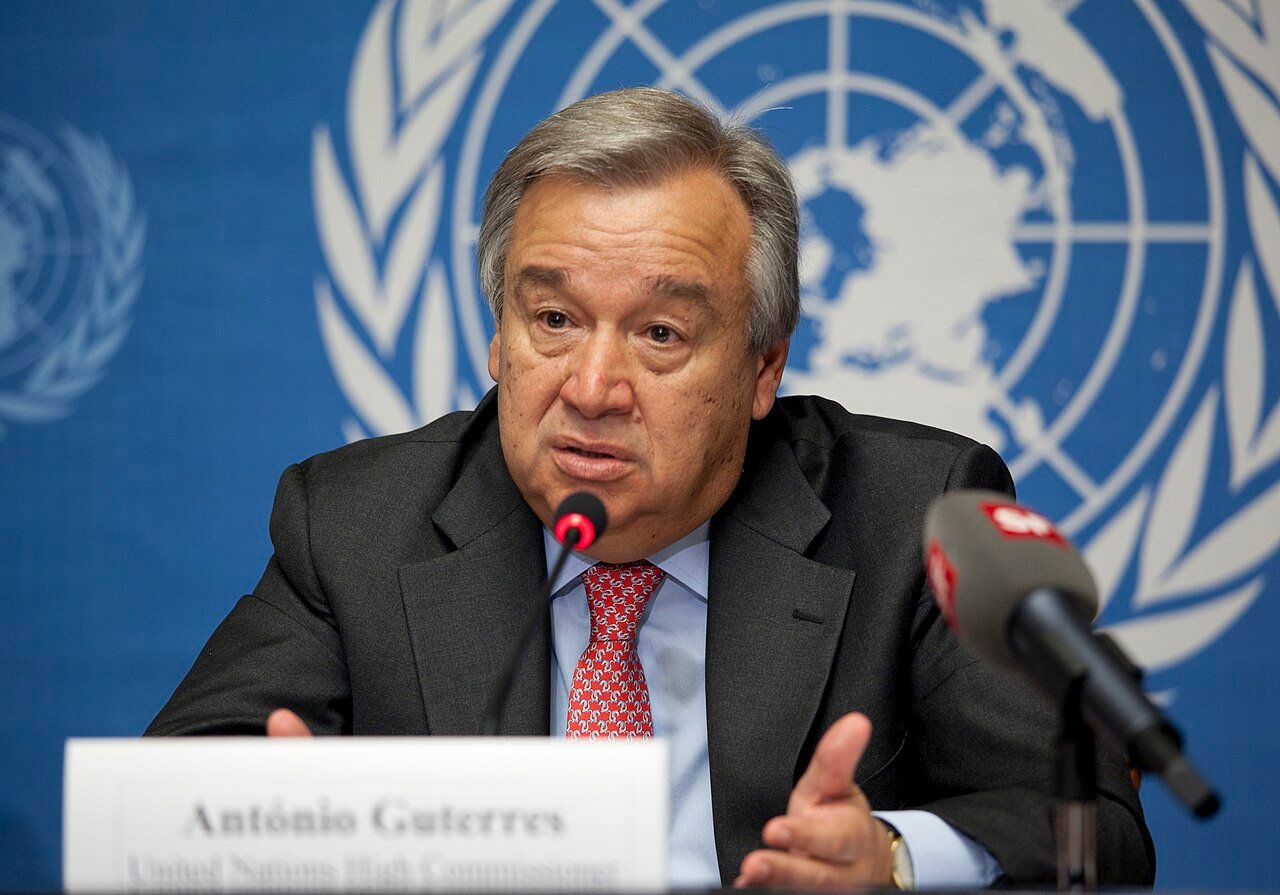
António Guterres in Geneva, 3 August 2012, then UN High Commissioner for Refugees. Archive photograph, not the 13 October 2026 budget presentation. Eric Bridiers / US Mission Geneva. Public-domain US government photograph; display may be resized or cropped. Image source and creator; licence information.


Leave a Reply