Last updated: 25 October 2026, 7.10pm GMT.
A NASA Dragonfly simulation has rehearsed the rotorcraft’s first autonomous landing on Saturn’s moon Titan, on a computer testbed in Laurel, Maryland. NASA announced the milestone on 23 October; Dragonfly remains on Earth.
What the NASA Dragonfly simulation tested
NASA’s 23 October engineering update describes a real-time rehearsal bringing together flight software, avionics and simulated sensor inputs. The virtual vehicle searched for a safe landing site, turned back and descended.
Navigation cameras, inertial measurement units and lidar were represented in the test. Lidar supplies measurements used to assess terrain and potential hazards. The milestone concerns how systems work together, rather than a physical flight above another world.
How this fits the wider mission
The NASA mission overview sets out a planned 3.3-year exploration of different Titan locations, including dunes and Selk Crater. Its central scientific purpose is to investigate chemistry relevant to the origins of life. A successful engineering rehearsal does not constitute a finding about life on Titan.
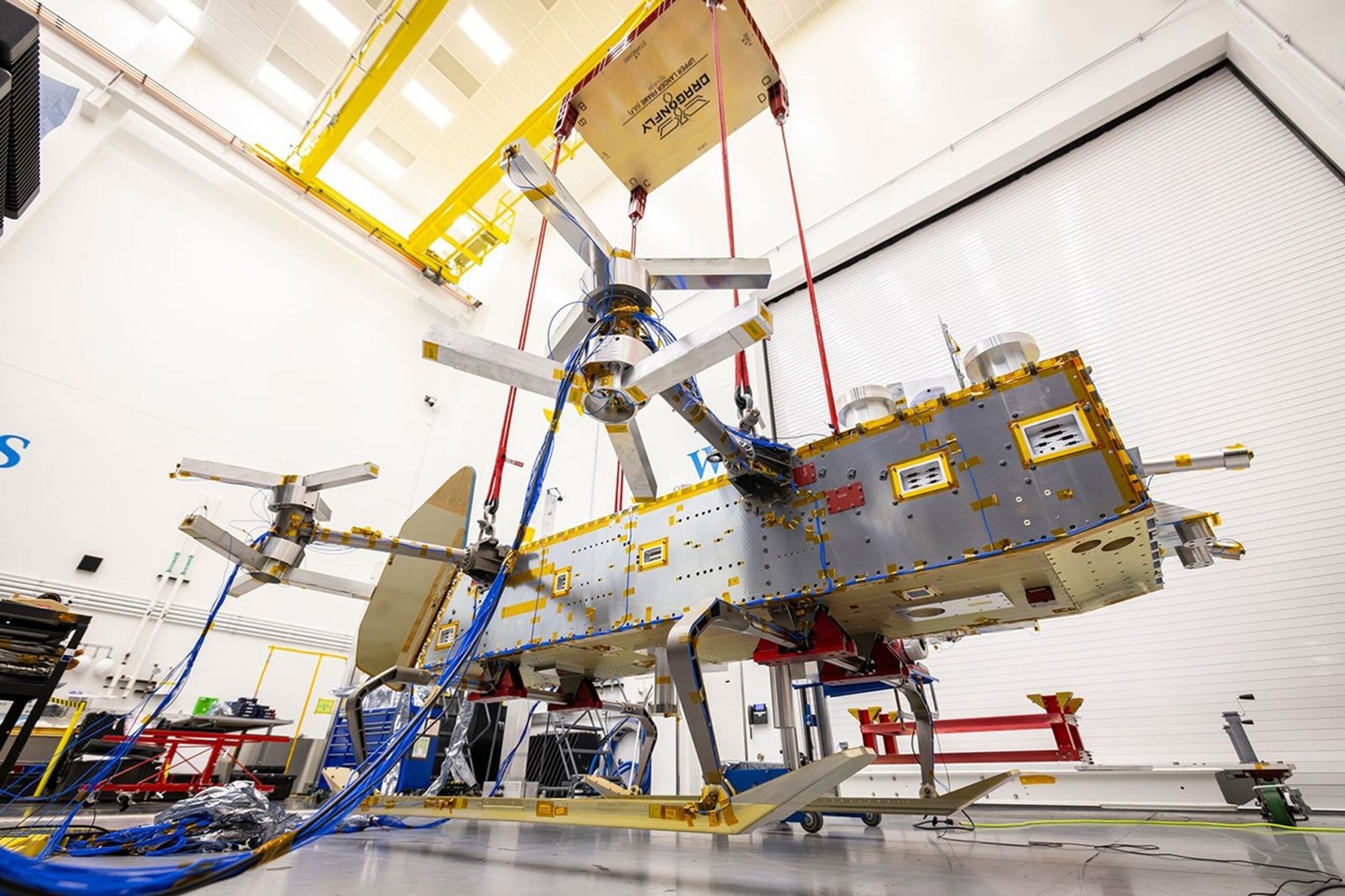
Earlier work involved different kinds of evidence. In its 9 July account of structural tests, Johns Hopkins APL described suspending the lander frame above the floor and measuring how vibrations travelled through it. That helps explain why one milestone cannot stand in for the entire qualification programme: a structure’s response to vibration and a navigation system’s decisions are separate questions.
Brighton Locals’ view
Editorial judgement: this is a useful advance because it tests interaction between systems, where success by individual components can hide problems. The strongest evidence will come from repeating demanding sequences on the equipment that will actually fly. The announcement deserves attention without treating a laboratory success as a guarantee that the mission is ready.
What happens next
NASA says engineers will repeat first-flight testing on Dragonfly’s actual flight system, try other flight profiles and introduce faults deliberately. Those results will matter more to the assessment of readiness than another successful nominal rehearsal.
How to follow the evidence
Use the dated engineering update for this test and NASA’s mission overview for the current timetable. When watching mission animations, check whether they show a simulation, an artist’s concept or recorded hardware testing; each answers a different question.
Read also: why NASA’s Swift observatory has ended its science mission.
Image: Dragonfly’s structure during ground vibration testing at Johns Hopkins APL in Maryland, published on 9 July 2026. Archive photograph, not the October simulation. NASA/Johns Hopkins APL/Ed Whitman; public-domain source and rights record.


Leave a Reply