Last updated: 13 October 2026, 22:39 BST
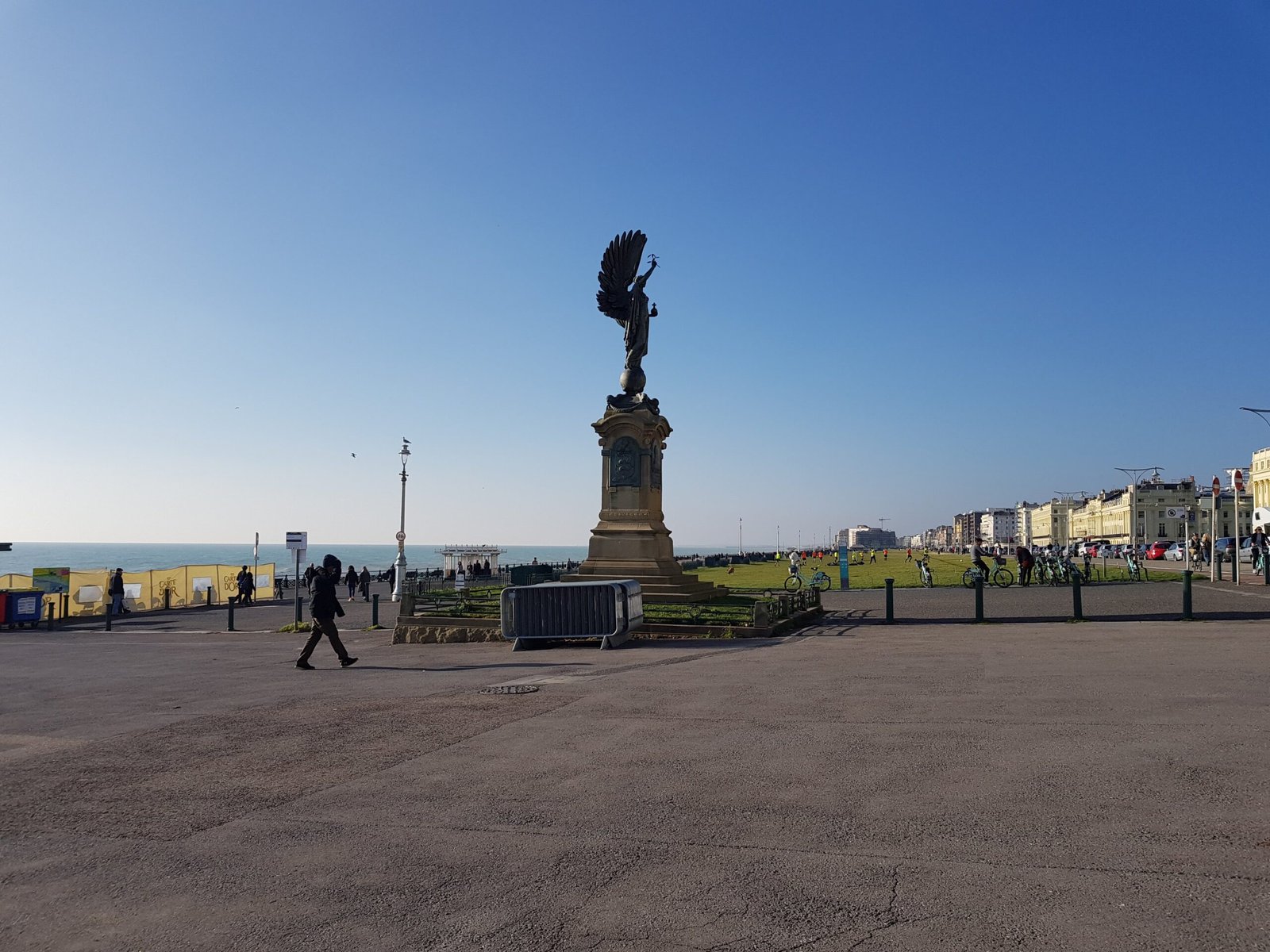
Photo update: a landscape archive view of the Peace Statue and meeting area now accompanies this guide. The consultation dates and details are unchanged.
- Brighton & Hove City Council is consulting on changes to the A259 between Fourth Avenue and West Street.
- The plans cover Phase 3, Fourth Avenue to the Peace Statue, and Phase 4, the Peace Statue to West Street.
- A public drop-in is scheduled for Saturday 17 October, 11am–2pm, at the Edward VII Memorial near the Peace Statue.
- The online consultation is due to close on 25 October 2026.
People who use the seafront road, cycle lanes, pavements, crossings, loading bays or disabled parking have a limited window to examine the latest A259 Hove to Brighton consultation drawings and submit evidence before the design moves forward.
A259 Hove to Brighton consultation: what is proposed
The council’s Your Voice consultation platform describes a scheme between Fourth Avenue in Hove and West Street in central Brighton. It is an eastern extension of the A259 work already progressing west of Fourth Avenue.
Published project information says the two sections would include a separated two-way cycle lane, pavement improvements, revised crossings and junctions, and changes to loading and disabled parking. Phase 3 runs from Fourth Avenue to the Peace Statue; Phase 4 continues from the memorial to West Street.
The consultation opened on 14 September 2026. The council’s project timetable gives the closing time as 11.59pm on Sunday 25 October 2026. Its Business Brighton & Hove briefing also confirms the deadline and says the survey takes about 10–15 minutes.
Why the 17 October drop-in matters
The remaining in-person session is listed for Saturday 17 October, 11am–2pm, at the Edward VII Memorial near the Peace Statue. That is useful for questions which a plan drawing may not answer clearly: the width and position of lanes, pedestrian crossing movements, delivery access, blue-badge spaces and how junction signals would work.
This is not a final construction notice. Consultation feedback still has to be analysed, and construction of every section depends on approvals and funding. Readers should therefore separate the published proposal from an agreed final layout.
Why it matters locally
The route joins Hove Lawns, the bandstand, the i360 area, Shelter Hall and the Brighton Centre. Small changes in loading, crossings or traffic lanes can affect residents, traders, bus users and visitors differently. The most useful responses will identify an exact location and explain a repeatable problem, rather than offering only general support or opposition.
Read the drawings for the section you actually use. A delivery business could explain its vehicle size and unloading time; someone using a mobility aid could describe the crossing movement they need. These are examples of useful evidence, not findings that the proposed scheme creates those problems. A street name and a specific movement are more informative than a broad statement that the whole seafront is difficult to navigate.
What residents should do
- Open the council’s Your Voice page to review “A259 Hove to Brighton Active Travel Scheme”.
- Check whether your comment concerns Phase 3, Phase 4 or both.
- Refer to a junction, bus stop, loading bay, crossing or numbered plan wherever possible.
- If you need clarification, attend the 17 October drop-in before filing the survey.
- Submit before the 25 October closing date and keep a copy of your response.
Brighton Locals’ view
The consultation is worthwhile because this corridor serves people walking, wheeling, cycling, driving, working and making deliveries. The test is whether the final design publishes a clear response to practical conflicts—especially accessibility, loading and junction movements—rather than treating participation as a headcount.
What to watch next
Watch for the consultation report, any changes to drawings, a decision timetable, traffic modelling and confirmation of funding for each section. Evidence that specific access concerns changed the design would strengthen confidence in the process.
Bottom line
The key dates are 17 October for the public drop-in and 25 October for the survey. Inspect the exact section you use and submit location-specific evidence.
The council’s 17 October event page is the direct checking link for the drop-in. The project page contains the survey and supporting plans. This is a practical guide to an open consultation, which began in September, rather than a new announcement that works have been approved.
Archive: Peace Statue and surrounding seafront square, Hove, 17 November 2018. Photo: Irid Escent / Flickr via Wikimedia Commons, CC BY-SA 2.0. Resized and cropped for display. This shows the announced drop-in landmark and its surroundings, not the 2026 event or the proposed road layout.
.jpg)

Leave a Reply