Last updated: 18 October 2026, 04:31 BST.
An Anthropic employment study published on 16 October 2026 reports a sharp fall in the share of junior technical hires while use of Claude agents expanded. It is a revealing company case study, not evidence that six people lose their jobs for every person using AI.
In short
- The study concerns work inside Anthropic, not a representative sample of UK employers.
- It reports junior technical hires falling from 27% to 9% of technical hires.
- Its six-to-one agent-hours comparison measures runtime, not six equivalent employees.
- The authors acknowledge that adoption of the tools was not random.
Anthropic employment study: what was measured?
The company’s published research, by Nathan Wilmers, Regina Catipon, Maxim Massenkoff and Peter McCrory, combines internal records with 17 employee interviews. Anthropic reports that interactive agent runtime exceeded employee hours six to one by August.
The full paper explains the comparison: agent runtime includes inference and active tool use, excluding waits longer than 30 minutes; human hours are estimated from headcount using a 40-hour week. Parallel agents can accumulate runtime simultaneously. It is not a measurement of six human-quality hours of finished work for each hour a person works.
A smaller share is not the same as a headcount cut
The junior-hiring figure is about composition. It does not, on its own, tell a reader how many junior jobs were advertised, how many applicants were hired or whether a particular employee was dismissed. To answer those questions, a report needs the underlying counts and a consistent period, not just a percentage.
That distinction matters for Brighton students and early-career applicants. A warning about a narrower entry route deserves attention without being inflated into a claim that junior work has vanished. Applicants can ask an employer how it trains new staff, who reviews AI-assisted work and how responsibility develops over time.
Why the productivity evidence needs care
The authors compare engineers adopting coding agents with colleagues who had not yet adopted them. They explicitly note that adoption was not random: someone preparing a major project might adopt a tool while already becoming more productive. That limits a simple claim that the tool alone caused every observed improvement.
There is a second question beyond output volume: what counts as useful work? More drafts or code can create more material to review. A team deciding whether to adopt an agent needs to measure completed, accepted work alongside checking time, corrections and unresolved errors. Counting generated output alone risks rewarding a busy pipeline rather than a better service.
What a Sussex team could test
Start with a bounded task using material the team is allowed to process. Record the time spent preparing instructions, reviewing the result and repairing mistakes, as well as generation time. Use the same acceptance criteria for the human-only and assisted versions.
Keep a named person responsible for approval, and preserve a route for junior staff to learn the underlying task. Otherwise, automation can remove practice opportunities without establishing who will gain the judgement needed to supervise it. That is an organisational risk to assess, not a measured outcome for Sussex in this study.
Our AI research guidelines explainer provides separate context on oversight and permission; it is not independent verification of Anthropic’s employment figures.
Brighton Locals’ view
The hiring-share change is the more consequential signal than the headline runtime ratio. Employers should explain how newcomers will acquire skills in an agent-heavy workplace, while testing whether tools improve accepted outcomes after review costs are counted.
What to watch next: comparable evidence from other organisations, absolute hiring counts and longer-term quality measures. Anthropic’s report and paper are primary company research, not an independent audit or a forecast of UK redundancies.
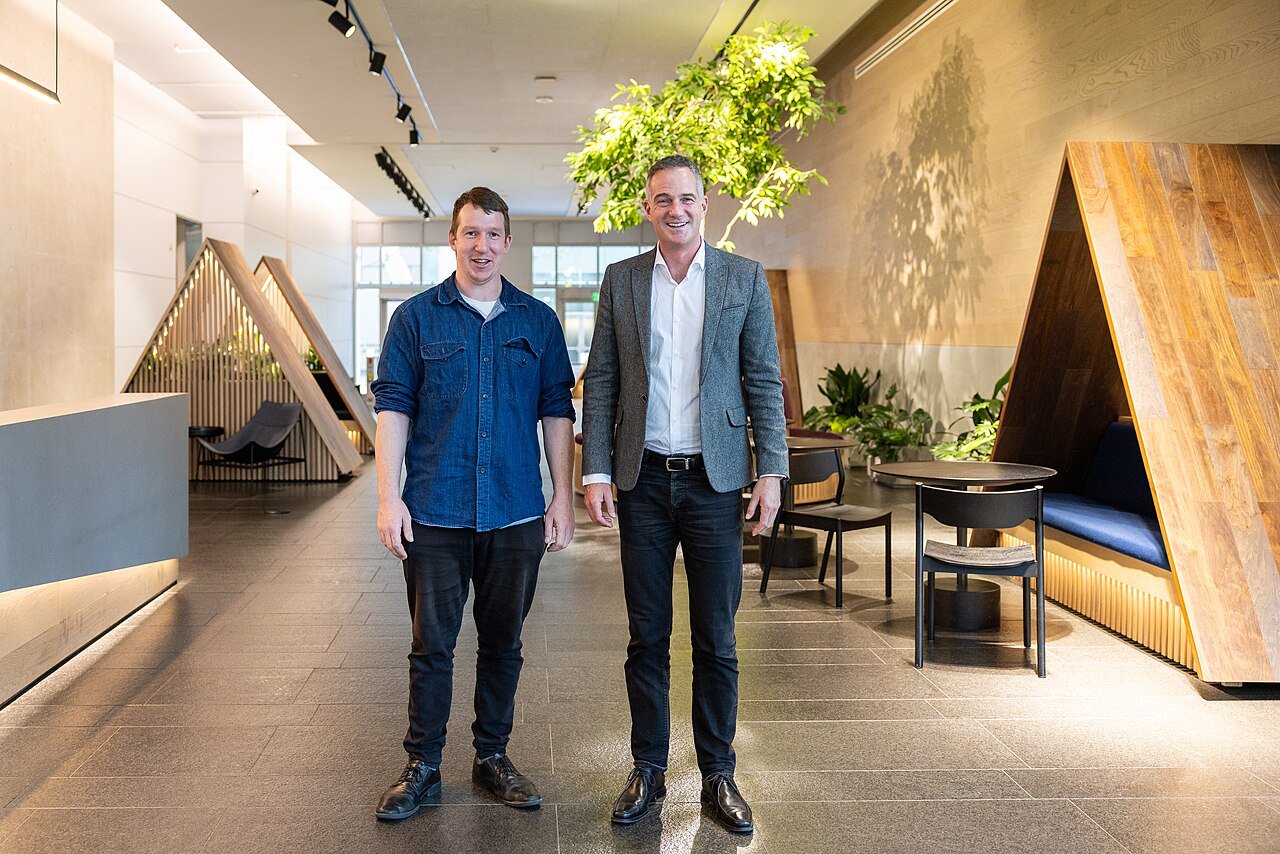
Featured image: Peter Kyle visiting Anthropic in San Francisco, 25 October 2024. Archive visit photograph, not the authors or announcement of the 2026 employment study. Alecsandra Dragoi / Department for Science, Innovation and Technology, via Wikimedia Commons, CC BY 2.0; resized.


Leave a Reply