Last updated: 17 October 2026, 10:17 BST. This report concerns a proposal, not a new rule already in force.
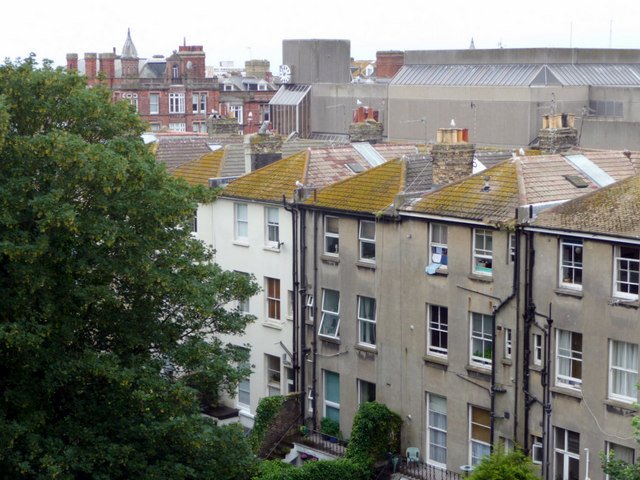
“Rooftops of Hove, East Sussex”, an archive view from The Drive on 11 July 2009. Christine Matthews / Geograph, CC BY-SA 2.0. Resized for display. Not evidence of current smoke or a breach.
The Brighton and Hove smoke control proposal would bring the city’s urban area under one order, including moored vessels. A formal council notice published on 15 October 2026 gives residents until 26 November to make representations, including objections. It does not announce that the new order has started.
In short
- One urban-area order is proposed, replacing five existing areas.
- The formal response deadline is 26 November 2026.
- The earlier Cabinet decision was on 14 May, not this week.
- Check the map, exemptions and appliance rules before assuming what changes for your home.
Brighton and Hove smoke control: what is new?
The council’s statutory notice, carried by the Brighton Argus on the Public Notice Portal, distinguishes two processes: a proposed new order and a revocation order for the existing arrangements. The latter was confirmed by the Secretary of State on 22 September and cannot take effect earlier than six months after confirmation.
That is not a verified start date for the replacement. The notice refers to specified exemptions without setting them out in its short text. Readers should inspect the actual documents rather than treating a summary as a ruling on an individual property or boat.
Why the boundary matters in Hove
The 14 May Cabinet decision approved the principle of replacing the five areas with one, covering the built-up city and urban fringe within the local planning authority boundary. This October notice is a further formal stage, not a fresh Cabinet vote.
The supporting report describes the old areas as Brighton schemes created in 1974–79. It excludes the city’s South Downs National Park area from the recommended expansion. “Citywide” is therefore a convenient description, not a reason to ignore the boundary.
The report connects the proposal to winter particle pollution from solid-fuel burning. It also identifies future enforcement funding as an issue once the available grant support runs out. A larger regulated area needs understandable rules and a credible service behind them.
What smoke control does, and does not, mean
GOV.UK’s current guidance explains the distinction between authorised fuels and Defra-approved, or exempt, appliances. Wood is an unauthorised fuel that can only be burned in an exempt appliance in a smoke control area; the fuel must also be permitted by the manufacturer.
The guidance says chimney smoke in an English smoke control area can attract a penalty up to £300. Buying unauthorised fuel for a non-approved appliance can lead to a fine up to £1,000. These are national rules, not new penalties created by this Brighton proposal.
Outdoor barbecues, chimineas and pizza ovens are treated differently, but an appliance using a building’s roof chimney has additional restrictions. Garden bonfires remain subject to separate rules. Do not interpret a smoke-control summary as blanket permission for outdoor burning.
What residents should do
Read the proposed order and plan, available at town-hall receptions and council libraries during normal opening hours. To respond, email EHL.EnvironmentalProtection@brighton-hove.gov.uk, quoting the proposed Smoke Control Order 2026 and explaining the point you want considered. Keep a copy.
Before buying or using a stove, check the exact model against the exempt-appliance information linked by GOV.UK, and check the fuel instructions. Ask the council about your address and any claimed exemption. The photograph above does not identify offending properties.
Brighton Locals’ view
A more consistent urban boundary has a clear rationale, but consistency on paper is not enough. The council should make the final map, exemptions, implementation date and support easy to find together. Households need enough certainty to make sensible heating decisions, without confusing a consultation deadline with the day enforcement changes.
What happens next
The immediate milestone is the response deadline. We will look for the final wording, treatment of objections and confirmed commencement arrangements before describing the replacement as operational.
Bottom line: this is a chance to examine and challenge the proposed coverage, not a notice that every wood burner has suddenly become unlawful.

Leave a Reply