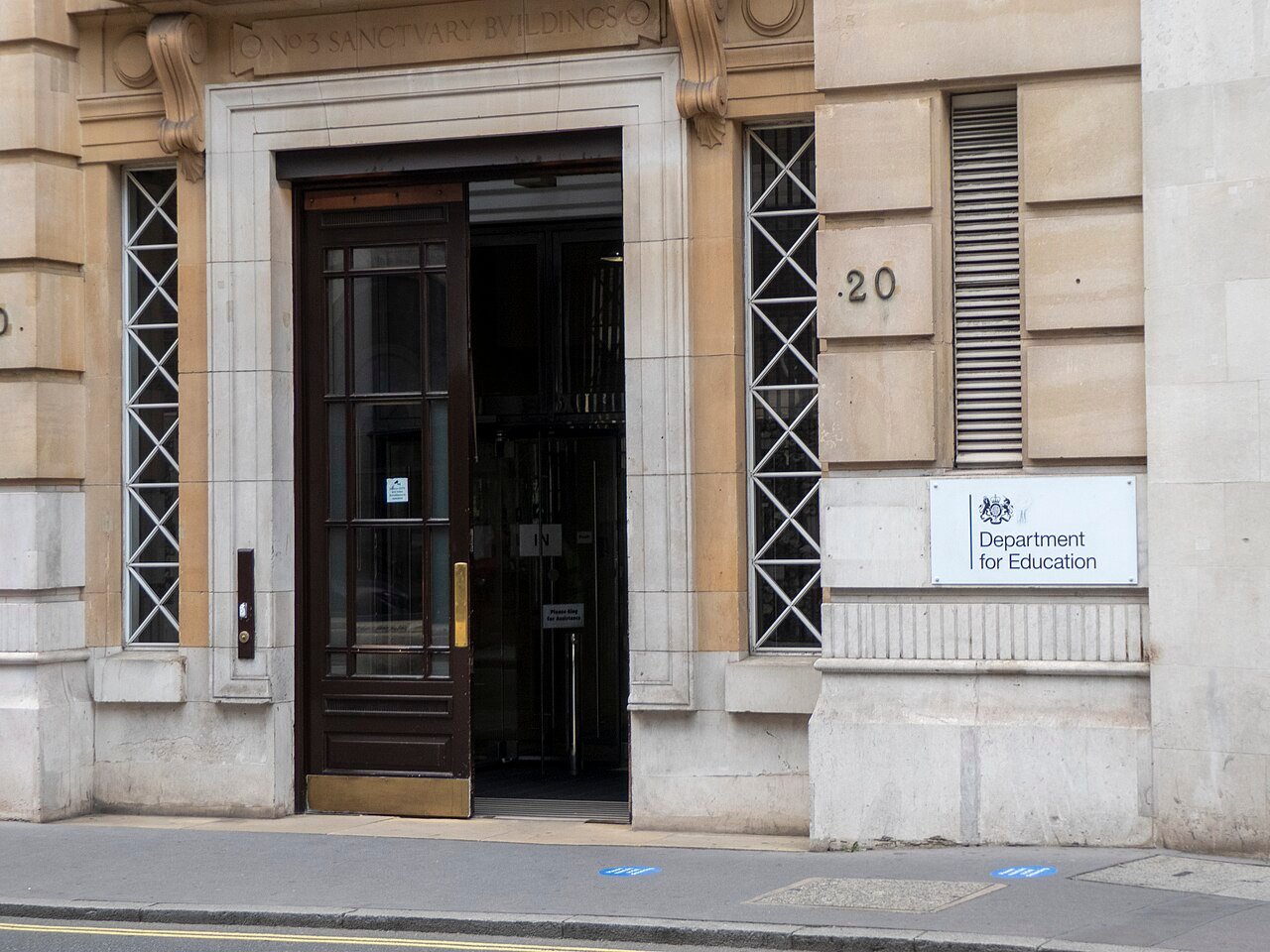
Featured image: Department for Education offices, Sanctuary Buildings, London, 16 August 2021. Archive photograph: Sebastiandoe5 / Wikimedia Commons, CC BY-SA 4.0. Resized for display; not a photograph of the new service.

Last updated: 13 November 2026, 18:20 GMT.
A new school comparison tool launched in England on Friday 13 November, bringing school and college profiles into one government service. For Brighton and Hove families, it offers another way to prepare a shortlist and questions for schools, with important differences between what is available now and what is promised later.
At a glance
- The Department for Education launched “find and compare school and college profiles” today.
- Profiles bring together location, age range, attendance, results and information such as breakfast-club provision.
- Side-by-side comparison is currently offered for secondary schools; primary comparison is planned.
- Integrated Ofsted reports are due next year, not part of the completed launch offer.
What the school comparison tool changes
The DfE’s launch announcement links to the new school and college profiles service. Its intended value is straightforward: reducing the number of separate places parents must search for basic school information.
For older pupils, the department says profiles include GCSE subject entries and destinations after Year 11, covering further education, apprenticeships and employment. Those are different questions from a single headline examination result. A family weighing a child’s next stage may want to understand both the subjects offered and the routes previous pupils have taken.
The launch has limits. The department says primary schools will gain the side-by-side feature later. It plans to add Ofsted reports in 2027, while fuller information about activities beyond the classroom is expected in coming years. Those future additions should not be read as functions already delivered.
Why it matters in Brighton and Hove
A clearer interface can make a complicated decision less time-consuming. It cannot decide whether a school suits an individual child. Attendance and attainment figures describe a school population; on their own they do not explain every family’s circumstances or a particular child’s likely experience.
The useful local approach is to use the profiles to identify questions, then ask the school about the detail that matters to your household: the daily journey, support arrangements, subject choices or the practical operation of a breakfast club. A listing of provision is a starting point for that conversation.
What parents should do
Search the official service for the schools you are considering. Note the reporting period attached to any figures and compare like with like. Confirm current provision directly with the school before relying on it for childcare or travel arrangements.
Keep the information search separate from your application. Check the Brighton & Hove City Council school-admissions pages for the relevant application process, eligibility and deadline. The DfE profiles are an information service, not confirmation of a school place.
For families also looking beyond school, our University of Brighton November open-day guide explains how to identify the right campus before booking a visit.
Brighton Locals’ view
Putting practical information beside results is a useful direction for a public digital service. The test is whether families can understand the data and act on it. Announcing future features clearly is part of that test: parents should know that primary comparisons and integrated inspection reports are still to come.
What to watch next
Look for delivery dates for primary comparison and the 2027 inspection-report integration, plus clear explanations of how current each data item is. Those improvements would make this a stronger decision aid. For now, use it to build a better shortlist and better questions.

Leave a Reply